
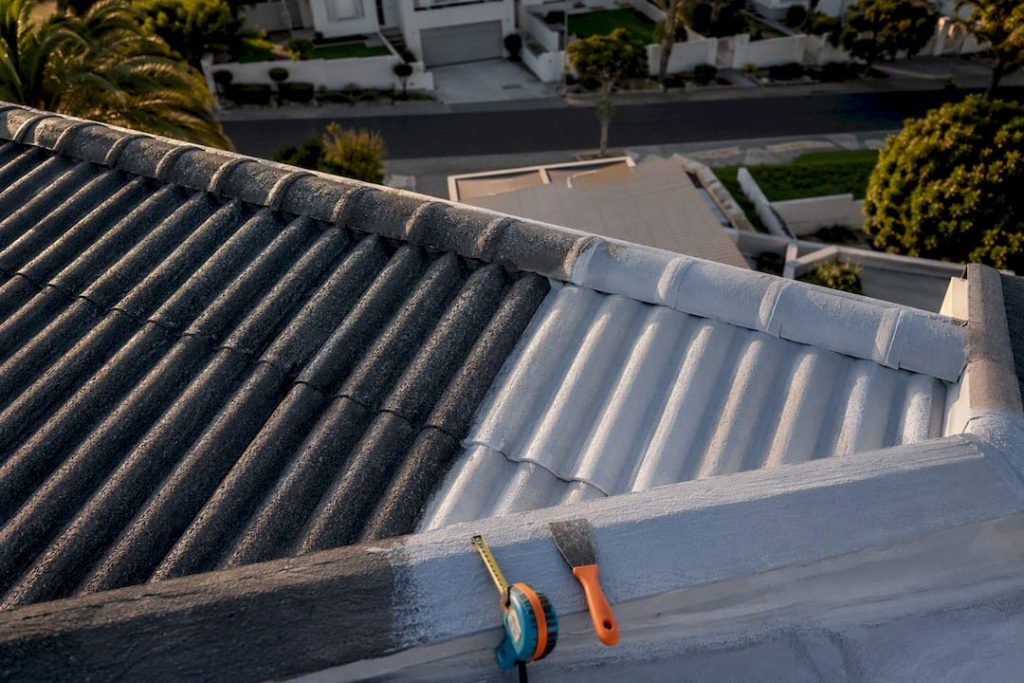
Roof painting in South Africa typically costs a moderate amount per square metre in 2026, once labour and standard materials are included. For an average 150 to 200 m² roof, that works out to roughly R11,000 to R22,000, while a full restoration with repairs and waterproofing can push R90 to R180 per m². Cape Apex Painters uses brands like Plascon Nuroof to hit these ranges on tiled and metal roofs across the Cape.
TL;DR:
- The cost of roof painting varies greatly depending on the roof’s pitch, condition, material, and local labour rates, with prices ranging from R55 to R150 per m².
- Preparation and repairs account for 15 to 30 percent of the total cost, and skipping proper prep can lead to failures within two years.
- Contractors should provide detailed quotes broken into cleaning, repairs, primer, coatings, safety, and warranty, avoiding lump-sum bids.
- Accurate measurement requires adjusting the footprint by pitch multiplier to estimate true surface area and paint volume needed.
- Coastal and humid areas require specific primers and coatings to address UV exposure, salt air, or mold, which influence pricing and material choices.
Table of Contents
- What drives the cost of roof painting
- Price ranges by roof type and sample project totals
- What a professional quote should include
- How to measure your roof and estimate paint quantity
- Regional pricing across Cape Town, Gauteng and Durban
- How to get accurate quotes and avoid bad contractors
- Publisher perspective: on-the-ground lessons from Cape Apex Painters
- How Cape Apex Painters can help
- Sources
What drives the cost of roof painting
Two contractors can quote the same roof and land R8,000 apart, and the gap almost always comes down to five things.
Area and pitch matter more than most homeowners expect. A steep roof has far more actual surface area than the house footprint suggests, which means more paint and more hours on ladders. Material and condition shift the price too. Tiles, Chromadek, IBR corrugated sheeting, and flat concrete each demand different prep and different coatings, and a roof with rust, moss, or flaking paint costs more to fix than one that just needs a fresh coat.
Preparation is where budgets swing hardest. Preparation and repairs often account for 15 to 30 percent of the total cost, and contractors frequently quote this as a separate line so homeowners can see exactly what they are paying for.
Cost drivers, in order of typical impact:
- Roof pitch and total surface area — steeper roofs need more paint and labour than flat footprint measurements suggest
- Substrate condition — rust, moss, cracked tiles, or peeling paint add repair costs before painting starts
- Coating specification — standard roof acrylic costs less than elastomeric waterproofing or reflective cool coatings
- Access and safety requirements — scaffolding, harnesses, and steep-pitch safety gear raise labour costs
- Local labour rates — metro areas and coastal towns often price slightly differently than rural regions
Labour is usually the single biggest line item, often making up 30 to 45 percent of the total quote, with regional variations of 5 to 20 percent depending where in South Africa you’re based.
Price ranges by roof type and sample project totals
Not all roofs cost the same to paint, even at identical square metreage. Tiled roofs sit at the lower end when they’re in good condition, since porous tile surfaces take standard acrylic well. Metal and Chromadek roofs need rust treatment and a bonding primer, which pushes the price up. IBR and corrugated sheeting follows a similar pattern, and flat concrete roofs often need waterproofing rather than a simple topcoat.
Typical per-m² bands you’ll see quoted in 2026:
- Tiled roofs (good condition): R55–R85 per m²
- Metal/Chromadek roofs: R70–R110 per m²
- IBR/corrugated sheeting: R65–R100 per m²
- Flat concrete roofs (waterproofing focus): R90–R150 per m²
Roof painting for a 150 to 200 m² home typically totals a moderate amount that varies with conditions, but the numbers scale differently once you factor in size and condition:
- 120 m² roof (light prep): roughly R6,600–R13,200
- 180 m² roof (standard prep, mixed condition): roughly R9,900–R19,800
- 250 m² roof, restoration-grade: A higher cost per m² for restoration work can substantially increase the total price
Once rust penetrates the substrate, tiles crack structurally, or leaks have caused internal damage, you’ve moved past painting into restoration or replacement territory. That’s a different conversation with your contractor, and usually a different warranty altogether.
What a professional quote should include
A quote that’s just one number for the whole job is a red flag, not a bargain. A proper written quote breaks the work into stages so you know exactly where your money goes.
- Cleaning and treatment — pressure washing, moss and fungus removal, and rust treatment listed as their own line, separate from painting
- Repairs — cracked tiles, loose fixings, or corroded sheeting replaced before any coating goes on
- Primer specification — named product (Plascon Nuroof and Prominent roof paint are common choices in South Africa, alongside Dulux roof coating lines) matched to your substrate
- Topcoat and coat count — usually two coats minimum, sometimes three on porous tile or heavily weathered metal
- Labour, access, and equipment — scaffolding or harness costs itemised, not buried in a lump sum
- Warranty, clean-up, and VAT — written warranty terms, disposal of old materials, and VAT clearly stated
Pro Tip: Ask your contractor to name the exact product they’re specifying, not just “roof paint.” Plascon Nuroof, Prominent, and Dulux coatings behave differently on Chromadek versus tile, and a vague product description usually means the contractor hasn’t actually assessed your roof yet.
Contractors that skip pressure washing or rust treatment save you money upfront and cost you double within two years, because paint applied over dirt or rust fails fast. If you want to see exactly how that plays out, our piece on roof leaks after painting walks through the most common failure points.

How to measure your roof and estimate paint quantity
Your roof’s actual surface area is always bigger than your house’s footprint, because pitch adds area that a floor plan doesn’t show. A 30 degree pitch adds roughly 15 percent more surface area than the footprint suggests, and a 45 degree pitch adds closer to 30 percent. Skip this step and you’ll under-order paint or under-quote labour.
To get a rough working figure yourself:
- Measure your house footprint length and width, then multiply for base area
- Apply a pitch multiplier: roughly 1.15 for a gentle 30° slope, up to 1.3 for a steep 45° slope
- Convert to paint volume using standard roof acrylic coverage of about 8 to 10 m² per litre, per coat
- Add extra litres for primer, which often covers less area per litre than topcoat
Pro Tip: Treat your own measurement as a budgeting estimate only. Always let the contractor measure on-site before signing anything, since their figure is what determines the final invoice, not yours.
Regional pricing across Cape Town, Gauteng and Durban
Where you live changes both the price and the product specification, not just because of labour markets but because of climate.
In Cape Town and the Cape Winelands, salt air and intense UV exposure mean coastal-grade primers and UV-stable topcoats are worth the extra spend. A 180 m² roof here typically runs R10,000 to R21,000, trending toward the higher end when coastal-grade coatings are specified. In Gauteng, inland UV degradation is the main concern rather than salt, and metro labour rates run slightly higher than smaller towns, putting a similar 180 m² job at roughly R10,500 to R20,000. Durban and the eastern seaboard deal with humidity and mould, which often adds a fungicide treatment step, nudging totals to R11,000 to R21,500 for the same size roof.
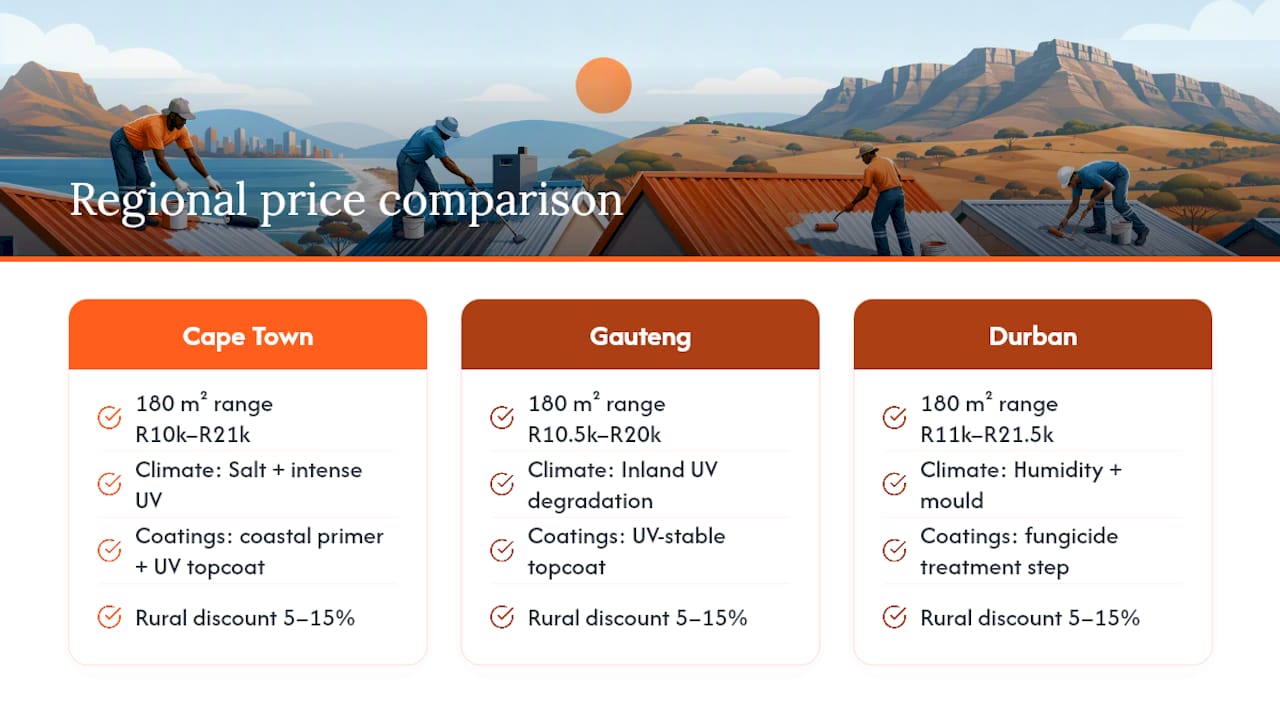
Rural pricing tends to run 5 to 15 percent below metro rates for equivalent work, and timing matters everywhere: book outside the rainy season in your region, since restoration jobs with multiple coats can take longer and depend heavily on dry weather windows.
How to get accurate quotes and avoid bad contractors
Comparing quotes properly means comparing scope, not just the bottom-line number.
- Get it in writing — product names, number of coats, prep steps, and warranty terms should all appear on the quote itself
- Check for line items — a single flat price with no breakdown makes it impossible to know what you’re actually paying for
- Watch for suspiciously low per-m² rates — a price well below R55 per m² usually means shortcuts on prep or a thinner-than-recommended coat
- Confirm access and safety costs are included — steep or multi-storey roofs need scaffolding or harness gear, and this shouldn’t be a surprise add-on later
- Reconcile unit prices across quotes — if one contractor quotes R70/m² and another R95/m², ask what’s different in scope before assuming one is overcharging
Pro Tip: If two quotes differ by more than 20 percent for what looks like the same job, ask both contractors to itemise prep separately. The gap is almost always hiding there, not in the paint.
Painting and restoration usually cost a fraction of full roof replacement and can extend service life by 8 to 15 years when the prep is done properly. That said, painting isn’t always the right call. The same logic that applies to choosing between painting and replacing doors applies to roofs: if the substrate itself has failed, structural repair or replacement is the honest recommendation, not another coat of paint.
Publisher perspective: on-the-ground lessons from Cape Apex Painters
Most roof failures we see trace back to skipped prep, not bad paint. A rushed job over rust or damp buys a homeowner two good-looking years and then a worse problem than they started with.
Two patterns show up constantly. Damp-affected ceilings under tiled roofs usually mean the underlying membrane failed before anyone touched a paintbrush, and painting over it just hides the symptom. Salt-affected metal roofs near the coast corrode from underneath long before surface rust is visible, which is why we treat and prime before ever opening a tin of topcoat. Get an on-site assessment before you commit to a number on paper.
— Thinus
How Cape Apex Painters can help
Cape Apex Painters handles roof painting, surface diagnosis, and damp proofing with an in-house team, not subcontractors, across Cape Town, the Winelands, and the Overberg. That matters because the person who assesses your roof is the same person accountable for the finish, and there’s no gap in communication between diagnosis and delivery.

A written quote from Cape Apex Painters breaks down prep, product specification, coats, and labour the same way this guide recommends you check for, so you can compare it against any other quote line by line. If your roof shows rust, moss, damp staining, or you simply want an accurate number before budgeting, book a site assessment with Cape Apex Painters and get a written quote based on what your roof actually needs, not a guess from a drive-by estimate.