
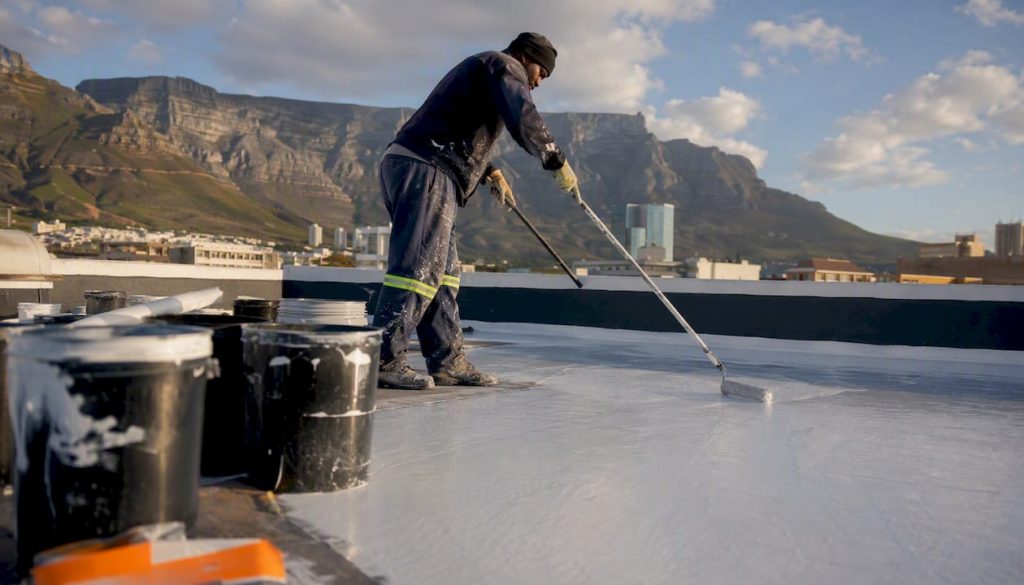
Silicone, acrylic, polyurethane, and asphalt-based emulsion are the four chemistries that cover the vast majority of commercial and residential roof coating projects. The one-sentence selection rule: silicone for roofs with standing water, polyurethane for rooftop foot traffic and abrasion, acrylic for well-drained roofs on a tighter budget, and asphalt emulsion for refreshing existing asphalt or built-up roofs without a full tear-off. Per the RCMA glossary, these chemistries differ fundamentally in solids content, elongation, and ponding tolerance, so matching chemistry to conditions is the first decision, not the last.
Before you go further, two hard stops:
- Coatings do not fix structural leaks. If water is entering through a failed seam, cracked deck, or saturated insulation, a coating will trap moisture and accelerate the damage. Diagnose and repair first.
- Verify substrate compatibility and warranty mil-build requirements before quoting. A silicone coat over an incompatible primer, or a single coat where the manufacturer requires two, voids the warranty on day one.
Table of Contents
- 1. What each roof coating chemistry actually does
- 2. Roof coatings vs. liquid-applied membranes: why the distinction matters
- 3. Which coating bonds to your specific roof substrate
- 4. Application methods, weather windows, and what goes wrong on site
- 5. What roof coatings actually cost and how long they last
- 6. How to choose the right coating system for your roof
- 7. What the research says about reflectivity and formulation advances
- Key takeaways
- The case for getting the specification right before the first coat goes down
- Capeapexpainters brings preparation-first roof coating to Cape Town and beyond
- Useful sources and standards references
1. What each roof coating chemistry actually does
Understanding the four dominant types of roof coatings means understanding how each one cures, where it excels, and where it fails. Chemistry determines cure behavior, which in turn drives weather-window requirements, ponding tolerance, and how the coating ages.
Silicone
Silicone coatings cure by moisture absorption from the air, which means they actually perform better in humid conditions than most alternatives. The standout property is ponding-water resistance: silicone does not absorb water or degrade when water sits on the surface for extended periods, making it the default choice for low-slope roofs with drainage problems. Reflectivity is high, typically in the white-pigmented formulations used on commercial roofs.
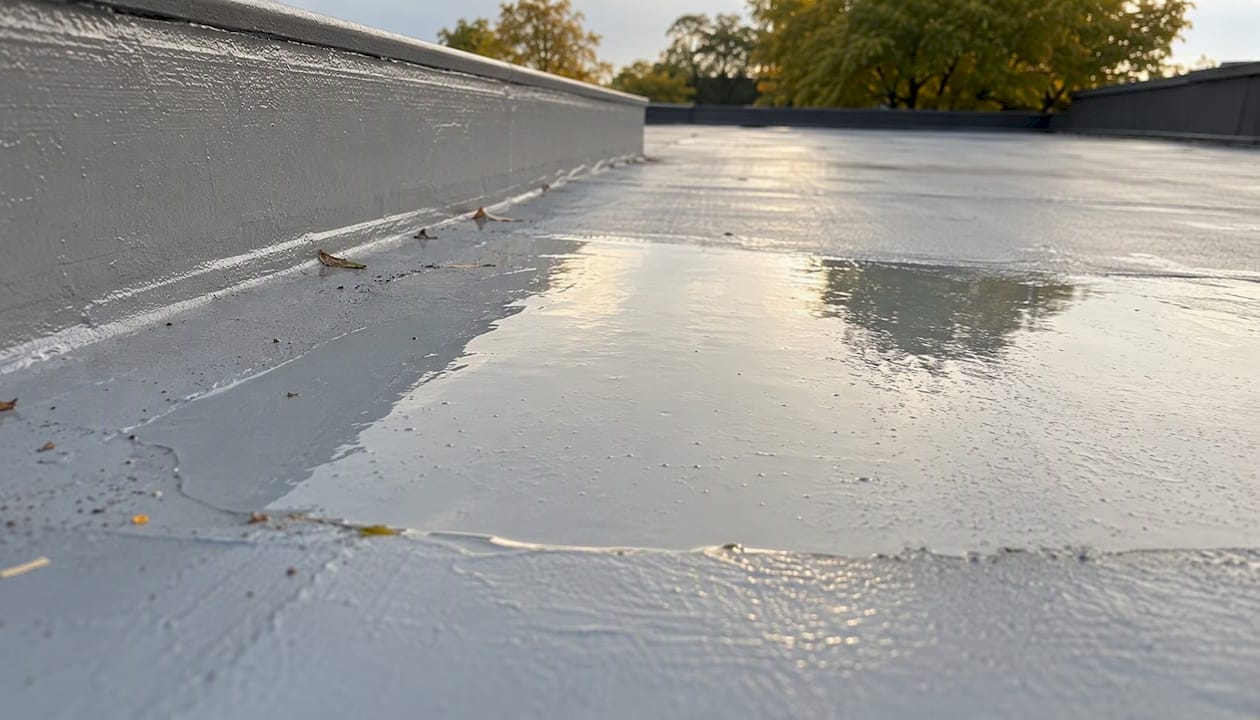
The downsides are real. Silicone picks up dirt aggressively over time, reducing reflectivity. Recoating a cured silicone surface is difficult because most other chemistries won’t bond to it without a silicone-compatible primer, and even then adhesion can be inconsistent. Cost runs higher than acrylic.
Acrylic
Acrylic coatings are water-based, low-VOC, and the easiest to apply and clean up. They cure by water evaporation, which makes them sensitive to rain during and shortly after application. On a well-drained roof, acrylic delivers solid UV reflectivity and reasonable service life at the lowest installed cost of the four chemistries. White acrylic formulations qualify for ENERGY STAR cool roof listings, which matters for energy-code compliance and utility rebates.
The critical weakness: acrylic degrades under standing water. Even a few days of ponding can cause blistering and adhesion loss. If your roof holds water after rain, acrylic is the wrong choice regardless of price.
Polyurethane (urethane)
Polyurethane systems are almost always two-coat builds. The base coat uses an aromatic polyurethane for its high tensile strength and abrasion resistance. The finish coat uses an aliphatic polyurethane, which is UV-stable and color-retentive; aromatic polyurethane yellows and degrades if left exposed to sunlight. This two-layer logic is not optional: specifying only the aromatic base and skipping the aliphatic top is a common, costly error.
Polyurethane offers the highest tensile strength and abrasion resistance of any coating chemistry, which is why it dominates on rooftop decks, walkways, and any surface with regular foot traffic. Ponding tolerance is moderate, better than acrylic but not in silicone’s league.
Asphalt-based and aluminum-pigmented emulsion
Asphalt emulsion coatings are the budget refresh option for existing asphalt roofs and built-up roofing (BUR) systems. They bond naturally to asphalt substrates without a primer, seal minor surface cracks, and the aluminum-pigmented versions add meaningful reflectivity to an otherwise dark surface. Cost is the lowest of the four chemistries.
The limitations are significant for anything beyond a maintenance refresh: poor UV resistance without aluminum pigment, limited elongation compared with elastomeric options, and no meaningful ponding tolerance. They are also incompatible with most single-ply membranes.
Side-by-side comparison
| Chemistry | Best for | Typical installed cost (per sq ft) | Expected lifespan | Ponding resistance | UV/reflectivity | Application/cure |
|---|---|---|---|---|---|---|
| Silicone | Low-slope, ponding zones, wet climates | $1.50–$3.00 | 10–20 years | Excellent | High (white) | Spray or roller; moisture-cure |
| Acrylic | Well-drained, budget-focused, high-reflectivity needs | $0.75–$2.00 | 7–15 years | Poor | High (white) | Roller or spray; evaporative cure |
| Polyurethane | High-traffic decks, abrasion-prone surfaces | $2.00–$4.00 | 10–20 years | Moderate | High (aliphatic top) | Spray; chemical cure |
| Asphalt emulsion | Asphalt/BUR refresh, budget maintenance | $0.50–$1.50 | 5–10 years | Poor | Low–moderate (aluminum) | Roller or brush; evaporative cure |
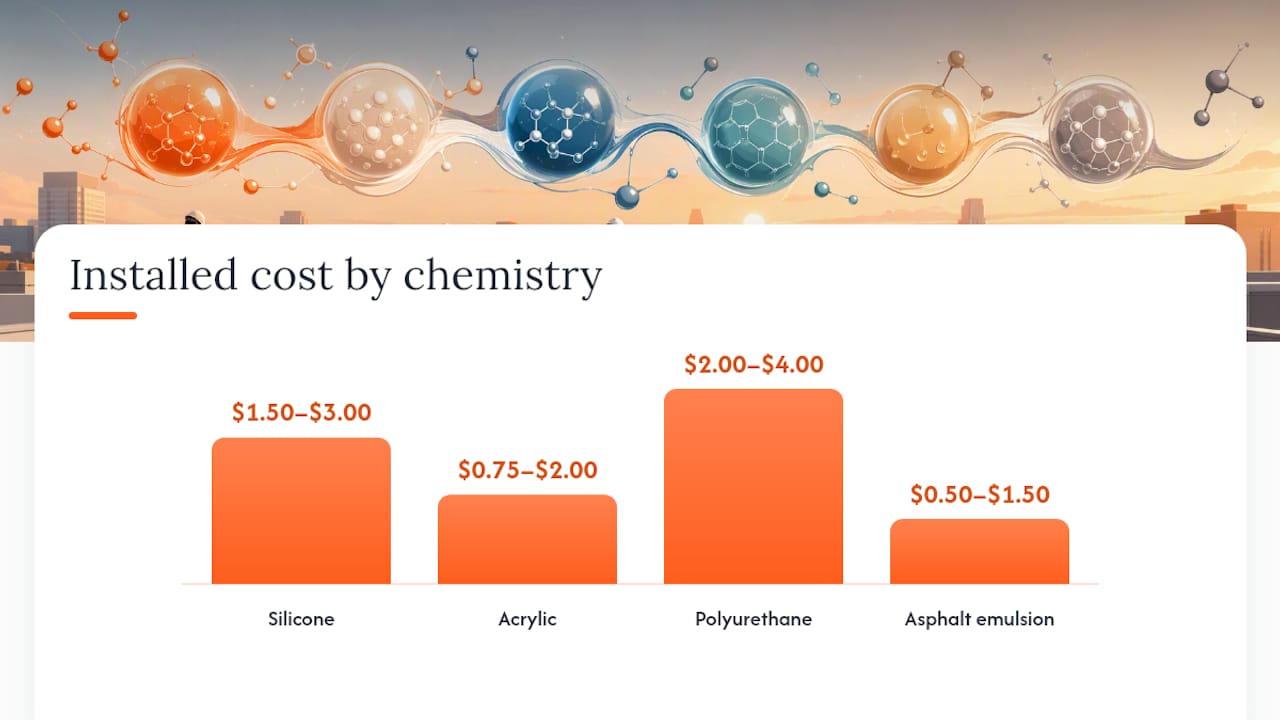
Cost ranges sourced from market-standard installed cost data.
Pro Tip: On a large roof with mixed conditions, a hybrid system often outperforms a single chemistry. Specify silicone in the low-drainage zones and acrylic or aliphatic polyurethane on the well-drained field. The material cost premium is modest; the warranty and performance gain is substantial.
2. Roof coatings vs. liquid-applied membranes: why the distinction matters
This is the most expensive confusion in commercial roofing. A roof coating and a liquid-applied roof membrane (LAM) are not interchangeable, and specifying the wrong one has code and warranty consequences.
Coatings are maintenance films, typically applied at 20–40 dry mils. They protect and extend an existing roof system. Liquid-applied membranes are primary roofing systems installed at much greater thickness, code-tested, and listed as standalone roofing assemblies.
Key distinction: The IBC added a dedicated roof coatings section (Section 1509) specifically to separate coatings from LAMs. Under the IBC reroofing exception, coatings can often be applied over existing coverings without tear-off. LAMs require code-listed approvals and are treated as new roofing assemblies.
The practical implication: if your roof has structural leaks, saturated insulation, or a failed membrane, a coating will not satisfy code requirements for a new roofing system. You need a LAM or a full reroof.
Checklist: does your project need a coating or a membrane?
- Standing water after every rain and no drainage fix planned? A coating will not solve this; a membrane or reroof may be required.
- Saturated insulation confirmed by core cuts or infrared scan? Coating over wet insulation traps moisture and accelerates deck deterioration.
- Structural leaks at seams, penetrations, or field? Repair first; a coating is not a structural fix.
- Owner expects a manufacturer-backed system warranty (not just a product warranty)? Confirm whether the specified product is listed as a roofing system or only as a maintenance coating.
- Local jurisdiction requires a permit and code-listed assembly for the scope of work? A coating may qualify under the reroofing exception; a LAM may require full submittal.
3. Which coating bonds to your specific roof substrate
Substrate compatibility is where many coating projects fail silently. The coating goes on, looks fine, and then peels within two seasons because the chemistry never properly bonded to the surface beneath it.
| Substrate | Compatible chemistries | Primer/notes |
|---|---|---|
| Metal (steel, aluminum) | Acrylic, polyurethane, silicone | Rust-inhibiting primer required on bare metal; clean and degrease thoroughly |
| TPO single-ply | Acrylic, silicone | Manufacturer-specific TPO primer required; verify product compatibility list |
| EPDM single-ply | Acrylic, silicone | EPDM primer required; avoid asphalt-based products (solvent incompatibility) |
| PVC single-ply | Acrylic, silicone | PVC-compatible primer; solvent-based products can attack PVC |
| Built-up roofing (BUR) | Acrylic, silicone, asphalt emulsion, polyurethane | Surface must be clean and dry; asphalt emulsion bonds naturally |
| Modified bitumen | Acrylic, silicone, asphalt emulsion | Granule-surfaced mod-bit requires embedding granules or applying a base coat first |
| Spray polyurethane foam (SPF) | Silicone (preferred), acrylic, polyurethane | SPF requires a topcoat within the manufacturer’s specified window; silicone is the industry standard topcoat for SPF |
| Concrete/masonry | Acrylic, polyurethane, silicone | Concrete must be cured, clean, and primed; moisture vapor transmission testing recommended |
Data sourced from side-by-side chemistry specifications.
Critical compatibility warnings:
- Cured silicone surfaces are notoriously difficult to recoat. Most chemistries will not bond without a silicone-specific adhesion primer, and even then, pull-off testing before full application is strongly advised.
- Asphalt emulsion on single-ply membranes is a common field error. Solvents in asphalt products can swell and degrade TPO, EPDM, and PVC. Never apply asphalt-based coatings to single-ply without explicit manufacturer approval.
- Granule-surfaced modified bitumen requires either granule embedment or a base coat before a reflective topcoat. Applying directly over loose granules produces adhesion failure.
- Shingle roofs are generally not candidates for liquid coatings; the irregular surface and granule texture prevent uniform mil-build and adhesion.
4. Application methods, weather windows, and what goes wrong on site
Getting the chemistry right is half the job. Poor application technique accounts for a significant share of premature coating failures, and most of those failures trace back to a handful of avoidable errors.
Application methods by chemistry:
- Spray application is the fastest method and the standard for silicone and polyurethane. Airless spray delivers consistent mil-build across large areas, but wind, overspray, and operator skill matter. Polyurethane plural-component systems require precise mix ratios at the gun.
- Roller application is common for acrylic and asphalt emulsion on smaller roofs or detail areas. It is slower but gives the applicator direct tactile feedback on coverage. Nap thickness affects mil-build, so match the roller spec to the product data sheet.
- Squeegee or notched trowel is used for high-viscosity products and detail work around penetrations, where uniform thickness in tight areas is critical.
Weather windows by cure type:
- Moisture-cure (silicone): Performs well in humid conditions; avoid application in temperatures below 40°F or during rain. Silicone is the most forgiving chemistry for high-humidity environments.
- Evaporative cure (acrylic, asphalt emulsion): Rain before the film skins over causes wash-off and dilution. Standard acrylics typically need several hours of dry weather after application. Rain-resistant acrylic formulations, such as SOPREMA’s 911FD, can resist wash-off within roughly 45 minutes of application, which meaningfully widens the usable weather window in unpredictable climates.
- Chemical cure (polyurethane): Temperature-sensitive; most systems require substrate and air temperatures above 50°F. Humidity affects cure rate but not wash-off risk.
Preparation checklist before any coating goes down:
- Confirm substrate moisture content is within the product’s specified limit (typically below 12–15% for most systems).
- Power-wash and allow full dry time; remove all loose material, oil, and biological growth.
- Repair all cracks, open seams, and penetration flashings before coating.
- Apply primer per the product data sheet; never skip primer on metal or single-ply substrates.
- Install reinforcement fabric (polyester or fiberglass mesh) at seams, flashings, and penetrations before the base coat.
- Conduct adhesion pull-off testing on a representative area before full application.
Pro Tip: Mil-build is the most under-checked specification on coating projects. A product applied at half the specified wet mils will cure to half the dry mils, cutting the warranty-eligible thickness in half. Measure wet mils with a wet-film gauge during application, not just at the end.
Weather window note: Standard acrylic coatings require extended dry periods after application. Rain-resistant formulations like SOPREMA’s 911FD narrow that window to approximately 45 minutes, a meaningful advantage in regions with afternoon thunderstorms or unpredictable spring weather.
5. What roof coatings actually cost and how long they last
Cost and lifespan are inseparable from mil-build and climate. A silicone system applied at the manufacturer’s warranty mil-build in a wet climate will outlast a budget acrylic applied thin in the same conditions by a wide margin, even if the day-one installed cost is higher.
Typical installed cost ranges (per square foot, US market):
- Acrylic: $0.75–$2.00
- Asphalt emulsion: $0.50–$1.50
- Silicone: $1.50–$3.00
- Polyurethane: $2.00–$4.00
These figures reflect installed cost including labor and materials at standard mil-builds, sourced from market cost comparison data. Actual project costs vary with roof complexity, access, substrate condition, and regional labor rates.
Expected service life:
- Acrylic: 7–15 years on well-drained roofs; shorter in ponding conditions.
- Silicone: 10–20 years; ponding does not meaningfully shorten silicone’s life.
- Polyurethane: 10–20 years; traffic and abrasion are the primary life-limiting factors.
- Asphalt emulsion: 5–10 years; UV degradation and limited elongation reduce longevity.
Reflective coatings can reduce roof surface temperatures by as much as 50°F on some roofs, which reduces thermal cycling stress and extends the underlying membrane’s life. That secondary benefit adds real lifecycle value beyond the coating’s own service life.
Warranty checklist before signing off on a specification:
- What is the minimum dry mil-build required to activate the manufacturer’s warranty? Get it in writing.
- Does the warranty cover ponding water? Most acrylic warranties explicitly exclude it.
- Is the substrate listed as compatible on the manufacturer’s current product data sheet?
- What are the exclusions? Hail, wind, foot traffic, and chemical exposure are common carve-outs.
- Is the warranty a product warranty (materials only) or a system warranty (labor and materials)? The difference matters enormously when a failure occurs.
6. How to choose the right coating system for your roof
The decision is not complicated once you have the right information. Work through this sequence before you contact a single contractor.
Step-by-step decision checklist:
- Inspect drainage. Walk the roof 24–48 hours after rain. Any standing water eliminates acrylic and asphalt emulsion from the shortlist. Silicone becomes the default chemistry for those zones.
- Quantify foot traffic. Regular maintenance access, rooftop equipment servicing, or a walkable deck? Polyurethane is the only coating chemistry with the abrasion resistance to handle it.
- Identify the substrate. Pull the original roofing specification or do a core cut. Confirm the substrate and any prior coatings, especially cured silicone, which restricts recoat options.
- Check prior coating history. If silicone was applied previously, your chemistry options narrow significantly. Test adhesion before committing to a product.
- Set the target warranty and mil-build. Decide the minimum acceptable warranty term, then confirm which products achieve it at what mil-build. This sets your minimum material cost floor.
- Choose chemistry or hybrid zones. If the roof has both ponding zones and traffic zones, specify silicone in the low areas and polyurethane on the walkways. A single chemistry rarely optimizes both.
Questions to ask every contractor bidding the project:
- Can you provide the manufacturer’s product data sheet and the specific warranty mil-build for the system you are quoting?
- What adhesion testing protocol do you use, and will you provide pull-off test results before full application?
- Is your crew factory-trained or certified by the coating manufacturer?
- What substrate preparation steps are included in your scope, and how do you handle existing silicone or failed coatings?
- Can you provide references and photos from at least two comparable projects completed in the last three years?
Red flags that indicate a weak specification or installer:
- A warranty claim with no mil-build specification attached.
- No adhesion testing proposed, especially on a previously coated or single-ply substrate.
- A single-coat quote on a high-traffic or ponding roof.
- Unwillingness to provide manufacturer technical data sheets before contract signing.
- No mention of surface preparation beyond “power washing.”
- A price significantly below all other bids, with no explanation of where the savings come from.
For exterior coating work in arid or UV-intense climates, weather-resistant exterior coating approaches used in regions like the American Southwest offer useful parallels for UV and thermal cycling considerations.
7. What the research says about reflectivity and formulation advances
The energy and durability benefits of reflective coatings are well-documented, and recent formulation advances have addressed some of the traditional scheduling constraints that made certain chemistries harder to specify.
Surface temperature reduction: Reflective roof coatings can lower roof surface temperatures by as much as 50°F on some roofs. Cooler surfaces mean less thermal cycling, which reduces the mechanical stress on seams, flashings, and the membrane itself. The downstream effect is a longer service life for the entire roofing assembly, not just the coating.
Key research-backed points:
- ENERGY STAR’s cool roof product listings provide independently verified reflectivity and emissivity data for qualifying coatings. Specifying an ENERGY STAR-listed product gives owners a defensible basis for energy-code compliance and utility rebate applications.
- Rain-resistant acrylic formulations, such as SOPREMA’s 911FD elastomeric coating, can resist wash-off within approximately 45 minutes of application. For contractors working in climates with unpredictable afternoon rain, this narrows the traditional weather-window disadvantage of acrylic chemistry.
- Aliphatic polyurethane topcoats are UV-stable and color-retentive; aromatic polyurethanes are strictly base-coat materials and will yellow and degrade under UV exposure if left unprotected. Specifying a polyurethane system without distinguishing between the two layers is a specification error with real performance consequences.
- The RCMA glossary remains the industry’s standardized reference for coating definitions and is worth consulting when evaluating manufacturer claims or comparing product data sheets.
Key takeaways
Matching roof coating chemistry to ponding tolerance, foot traffic, substrate type, and budget is the single decision that determines whether a coating system performs or fails prematurely.
| Point | Details |
|---|---|
| Ponding water requires silicone | Acrylic and asphalt emulsion degrade under standing water; silicone is the only coating chemistry that tolerates it reliably. |
| Traffic demands polyurethane | High-traffic decks and walkways need the abrasion resistance of a two-coat polyurethane system with an aliphatic topcoat. |
| Mil-build drives warranty validity | Every manufacturer warranty specifies a minimum dry mil-build; applying thin voids coverage regardless of chemistry. |
| Coatings cannot fix structural leaks | Saturated insulation or failed seams require repair or a code-listed membrane, not a maintenance coating. |
| Capeapexpainters recommends surface diagnosis first | Capeapexpainters specifies coatings only after addressing damp, adhesion failures, and substrate condition, ensuring the coating system performs as warranted. |
The case for getting the specification right before the first coat goes down
Most coating failures I see discussed in industry forums share one trait: the chemistry was chosen before the roof was properly understood. Someone picked acrylic because it was cheap, or silicone because a supplier recommended it, without checking drainage, substrate history, or prior coating compatibility. The coating goes on, looks good for a season, and then the problems start.
The chemistry decision is genuinely secondary to the diagnostic work. You need to know whether the roof drains, what the substrate is, what was applied before, and what the traffic pattern looks like. Only then does the chemistry shortlist make sense. Silicone on a ponding roof is a sound specification. Silicone over a previously coated surface with no adhesion testing is a gamble.
The hybrid system approach is underused on commercial roofs. Specifying a single chemistry across an entire roof when different zones have different demands is a compromise that serves none of them well. The material cost difference between a silicone zone and an acrylic zone on the same roof is modest. The performance difference over a ten-year warranty period is not.
One more thing worth saying plainly: the contractor who pushes back on adhesion testing, who quotes a single coat on a ponding roof, or who cannot produce a manufacturer data sheet with a warranty mil-build is telling you something important about how the job will be executed. A well-specified coating system is only as good as the installer who applies it.
Capeapexpainters brings preparation-first roof coating to Cape Town and beyond
Most roof coating failures trace back to what happened before the first coat, not the chemistry itself. Capeapexpainters takes a different approach: every project starts with a diagnostic surface assessment that identifies damp, adhesion failures, and substrate incompatibilities before a product is specified. That means no coating goes down over a problem that will undermine it within two seasons.

Capeapexpainters’s in-house team, covering Cape Town, the Cape Winelands, and the Overberg, handles surface preparation, repairs, priming, and coating application under one roof, with no subcontractors and no handoff gaps. For property owners and facility managers who need a coating system that performs for the full warranty term, that consistency matters. Whether the project calls for a reflective acrylic on a well-drained commercial roof or a silicone system in a ponding zone, the specification starts with the roof’s actual condition, not a price list.
Request an in-person assessment and quote to get a written specification matched to your substrate, climate, and warranty requirements.
Useful sources and standards references
For owners and facility managers who want to go deeper on specifications, testing, and product listings:
- 911FD rain-resistant elastomeric roof coating
- Elastomeric roof coatings: a comprehensive guide
- Roof Products | ENERGY STAR
- Liquid-applied roof membranes vs coatings
- Roof Coating Types 2026: Silicone, Acrylic, Polyurethane | TRB
- Roof Coating Types Compared (2026) — Specs & Costs