
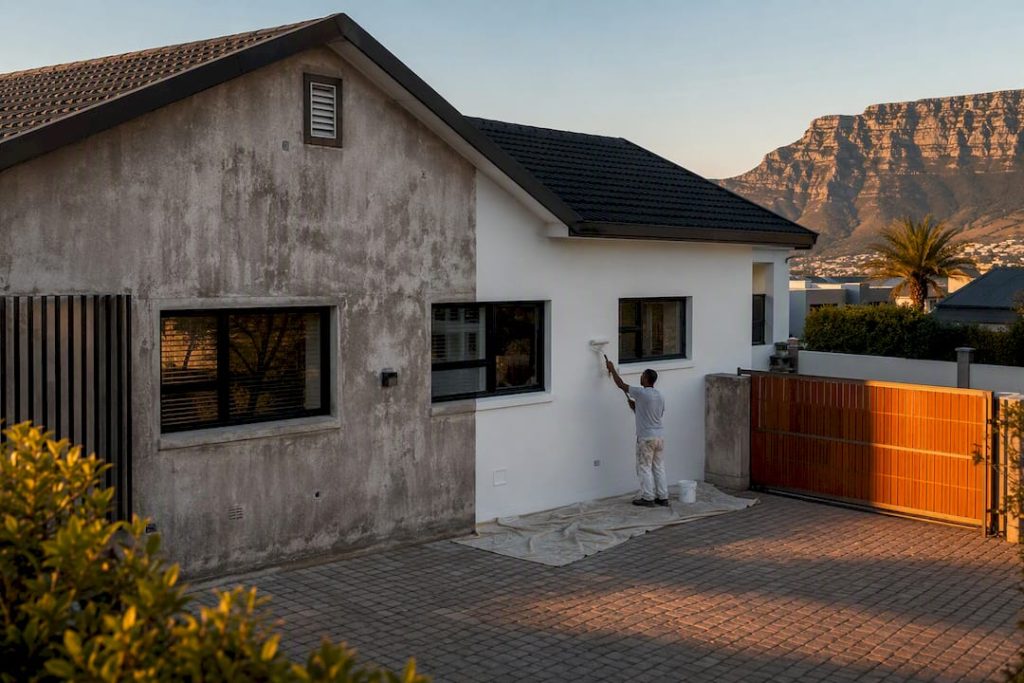
Most house exteriors need repainting every 5 to 10 years, but that window shifts hard depending on siding material, coastal exposure, and how well the last job was prepped. Wood often needs attention closer to the 3 to 7 year mark, while fiber cement can stretch past a decade. Before you commit to a calendar, walk your house and check for peeling, chalking, or cracked caulk lines.
TL;DR:
- Proper surface preparation and timely inspections are more critical to paint longevity than following fixed repaint intervals.
- Coastal homes and exterior walls exposed to harsh sun or moisture may need repainting 30 to 50% more frequently than inland properties.
- Peeling, cracking, or blistering are urgent signs to repaint immediately, while chalking and fading can often be monitored until scheduled maintenance.
- Using high-quality materials like premium acrylic paint and applying two coats on well-prepped surfaces extends the life of the exterior coating.
- An annual walk-around to identify early issues allows homeowners to address small problems early and significantly prolong the paint’s lifespan.
Table of Contents
- Recommended repaint intervals by siding material
- Key factors that change how long exterior paint lasts
- Signs your exterior needs repainting now
- How to make an exterior paint job last longer
- How long does a professional repaint take, and what drives the cost?
- Building a maintenance schedule that actually works
- What the guidelines get wrong about repaint timing
- Sources
Recommended repaint intervals by siding material
The 5 to 10 year figure you’ll see everywhere is a rough midpoint, not a rule. It comes from averaging across siding types that behave very differently once South African sun, coastal air, or humidity get involved. Paint pricing guides put the general range at 5 to 10 years for most homes, and break it down further by material.
Here’s how the ranges typically shake out:
- Wood siding: 3 to 7 years. Wood expands and contracts with moisture, which stresses the paint film faster than any other common substrate.
- Fiber cement: 10 to 15 years. Dimensionally stable and far less prone to the swelling that cracks paint on timber.
- Vinyl: 8 to 12 years, though vinyl rarely needs repainting at all unless you’re changing the colour.
- Stucco: 5 to 10 years, heavily dependent on how porous the surface is and how well it was sealed originally.
- Painted brick: 8 to 12 years, per Angi’s research, assuming the mortar joints are sound.
- Aluminium siding and cladding: 5 to 10 years, mostly limited by chalking and fading rather than adhesion failure.
- Trim, fascias, and window frames: 5 to 8 years. Trim takes more direct weather exposure and moves faster than the wall behind it, so it fails first.
Push toward the top of any range and you’ll usually find premium acrylic paint and careful surface prep behind it. A south facing or west facing wall that takes the brunt of the sun will fade and chalk noticeably faster than a shaded north wall on the same house, and darker colors absorb more UV heat than light ones, which shortens their working life too.
Key factors that change how long exterior paint lasts
Two houses painted on the same day, with the same paint, can age at completely different rates. Climate does a lot of that work. UV breaks down resin binders over time, humidity and freeze-thaw cycles stress the film from underneath, and salt air, as HowStuffWorks notes, accelerates coating breakdown enough that coastal homes often need inspection and repainting 30 to 50% more often than inland properties.
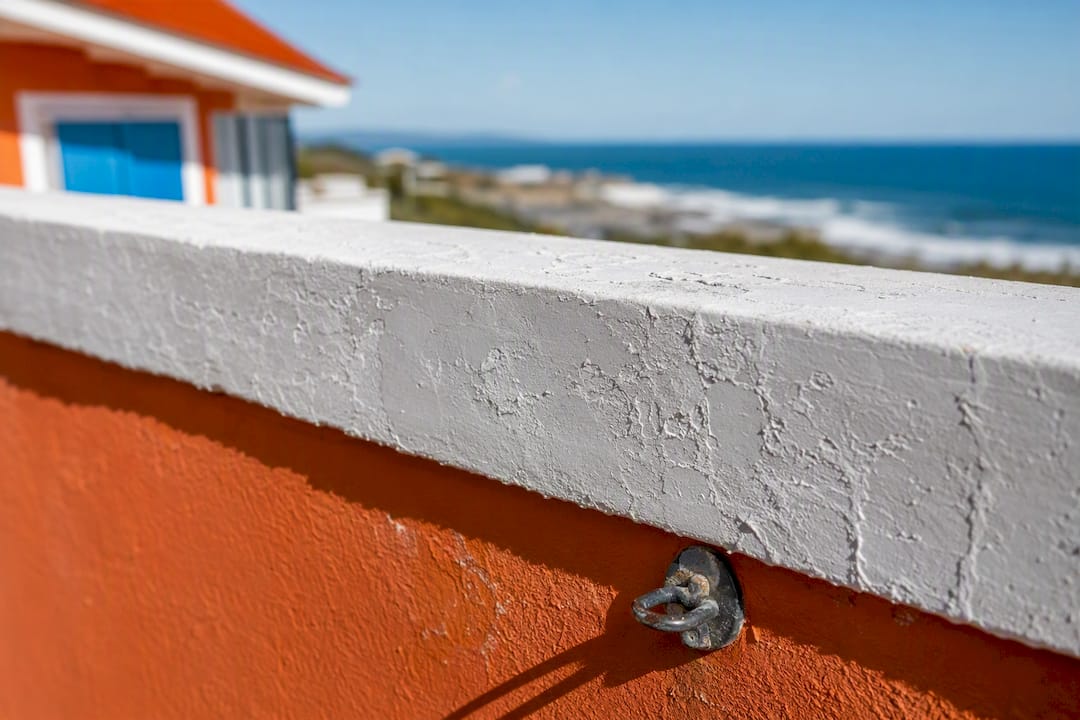
But climate isn’t even the biggest variable. Martha Stewart’s home advisors point out that surface preparation and the quality of the previous paint job usually matter more than the calendar. A wall that was scraped, sanded, and properly primed will outlast an identical wall where paint was rolled straight over old chalk and loose flakes, regardless of climate.
Other factors worth weighing:
- Contractor workmanship and coat thickness affect adhesion as much as the product used.
- Sheltered walls under eaves or behind trees often last years longer than exposed elevations.
- Older, thicker paint layers can trap moisture and blister faster than a fresh, single system.
Pro Tip: Before you assume your paint has “failed,” press a piece of tape onto the surface and pull it off. If paint comes away in flakes, the problem is adhesion, not just age, and a repaint won’t hold unless the surface gets properly stripped first.
Signs your exterior needs repainting now
Not every flaw means call a painter today. Some issues are cosmetic; others are your wall telling you water is getting in.
- Peeling or blistering — This is usually moisture trapped behind the paint film. Treat it as urgent, since the substrate underneath may already be damp.
- Cracking, especially in a spiderweb or straight-line pattern — A sign the paint has hardened past its flexible life. Left alone, it becomes an entry point for water.
- Chalking — A powdery residue that rubs off on your hand. Normal aging, and often manageable with a wash and monitoring rather than an immediate repaint.
- Fading — Cosmetic on its own, but a useful early warning that the protective layer is thinning.
- Mildew or dark staining, particularly on shaded or damp-prone walls — Often cleanable, but recurring staining points to a moisture problem worth investigating.
- Powdering on masonry or stucco — Usually means the substrate itself needs attention, not just a fresh coat.
Peeling and cracking call for action; chalking and fading can often wait for your next scheduled inspection.
How to make an exterior paint job last longer
Prep work is where paint jobs are won or lost, more than the brand on the tin. CertaPro’s painting guidance is blunt about it: professionally prepped and applied systems consistently outlast rushed or DIY work, because most failures start at the surface, not in the paint itself.
A solid prep sequence looks like this:
- Power wash to strip chalk, dirt, and mildew before anything else touches the wall. A pressure washing specialist will tell you this step alone determines how well the next coat bonds.
- Scrape and sand any loose or glossy paint back to a stable, feathered edge.
- Replace rotten timber and recaulk gaps around trim, windows, and doors before priming.
- Prime all bare wood, repaired patches, and stains. Skipping primer on repaired sections is one of the most common reasons touch ups fail early.
- Apply two coats of a 100% acrylic exterior paint. Acrylics flex with temperature swings far better than older oil-based formulas, which matters most on wood and trim.
- Choose satin or low-sheen finishes for walls and semi-gloss for trim. Higher sheen resists dirt and moisture better but shows surface flaws more.
On application, avoid painting in direct midday heat or when temperatures sit near freezing. Both extremes stop paint from curing properly. If you’re replacing an exterior door rather than painting around a failing one, it’s sometimes cheaper to repaint than replace, as One Day Doors & Closets explains.
Pro Tip: Keep a small tin of your exact paint colour and finish on hand. Touching up hairline cracks or caulk gaps the moment you spot them is far cheaper than waiting for a full repaint.
How long does a professional repaint take, and what drives the cost?
A typical crew spends 1 to 2 days on prep (washing, scraping, repairs) and another 2 to 4 days on painting for an average home, according to Angi’s project data. Rain, extensive rot repairs, or a house needing scaffolding for double storey walls can stretch that timeline noticeably.
Cost is driven mainly by:
- The amount of repair work needed before painting starts, including timber replacement and damp treatment.
- Access difficulty, height, and whether scaffolding or lifts are required.
- Total square metres of wall area and the number of coats specified.
- Paint grade, since premium acrylics cost more but need less frequent recoating.
- Labour, which usually reflects crew size and experience rather than just hours worked.
Spring and autumn tend to offer the most reliable weather windows for curing, avoiding both summer’s flash-drying heat and winter’s slow, damp cure times.
Building a maintenance schedule that actually works
A once-a-year visual walk around your property, ideally in spring, catches most problems while they’re still cheap to fix. Cape Apex Painters recommends a more detailed inspection every 3 to 5 years, shortened for wood siding and coastal homes where salt exposure speeds things up.
The reason prep matters so much comes down to what’s happening under the surface. Cape Apex Painters’ approach starts with a diagnostic assessment that flags damp and old paint failures before any new coat goes on, because painting over an active moisture problem just seals it in. Between professional repaints, homeowners can extend life themselves: rinse walls annually, recaulk gaps as they open up, and spot prime bare patches before they spread. Call a professional once you see peeling near roof lines or rot in trim, since those usually mean water has already gotten in.
What the guidelines get wrong about repaint timing
Most advice treats the repaint interval as a fixed schedule, something you circle on a calendar and forget until it comes around. That’s backwards. The 10 year figure floating around most guides is a budgeting tool, not a maintenance plan, and treating it as gospel is how homeowners end up ignoring a peeling south wall for three more years because “it’s not due yet.”
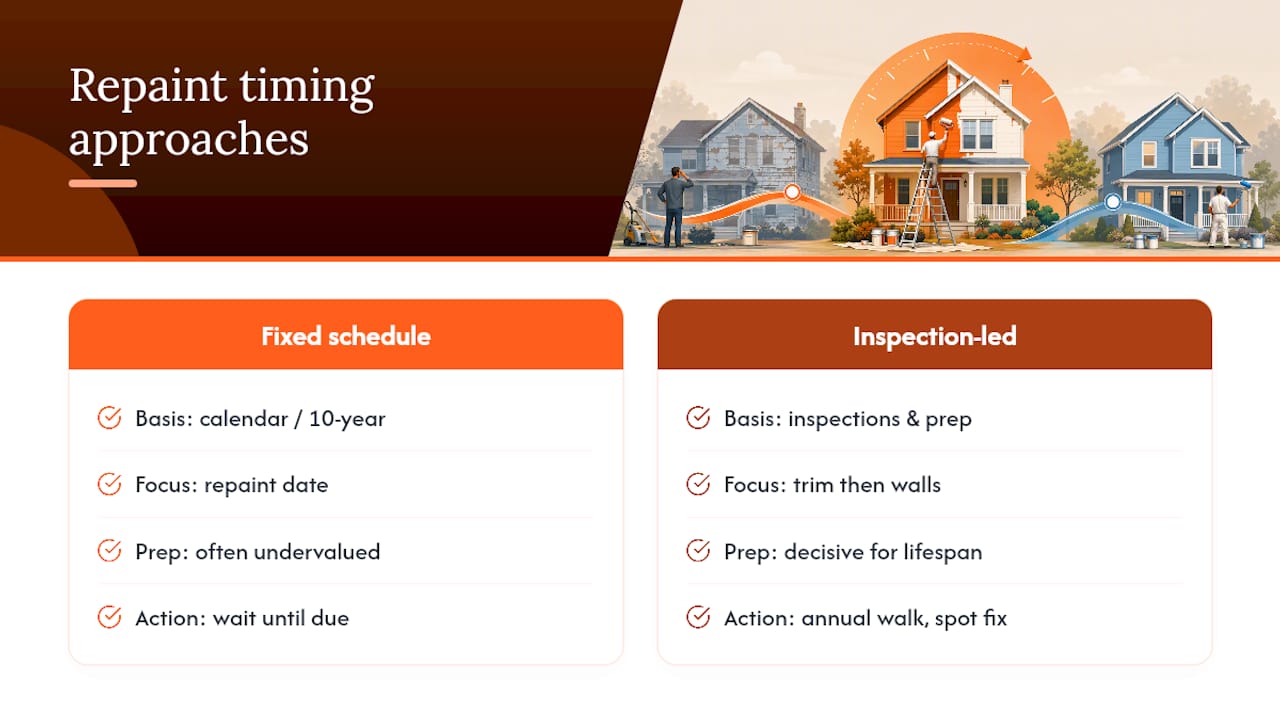
What the evidence actually supports is simpler: prep quality and inspection habits matter more than any number on a chart. A wood house with disciplined annual checks and quick spot repairs will often outlast a fiber cement home that was painted once and left alone. The conventional advice underrates how much a bad prep job in year one dooms everything that follows, no matter how good the paint was.
If you take one thing from this, make it the annual walk around your house, not the interval number. Look at the trim first, since it fails before the walls do. Fix small things immediately. The repaint itself is the easy part.
— Thinus