
A complete painting quote is an itemized, surface-by-surface price that lists scope, prep, labor, materials, overhead, and clear payment and warranty terms. If a quote doesn’t do that, ask for a rewrite before you compare it to anything else. The single test that matters: strip every bid down to identical scope before you look at price at all.
TL;DR:
- Proper painting quotes list each scope, prep, materials, labor, overhead, and warranty separately to ensure accurate comparison and transparency.
- Overhead and profit should be shown on their own line, and the “burdened rate” includes wages, taxes, and insurance, not just hourly wages.
- Differences in paint quality, surface condition, access, project size, and business overhead significantly influence bid variations.
- Building a standardized scope template and comparing quotes side-by-side prevents misleading price differences and hidden scope omissions.
- The most reliable bids follow a diagnostic visit process, specify products by name, and include detailed, itemized line items for prep and repair.
Table of Contents
- What a professional painting quote breakdown includes
- What actually drives the price up or down
- How to line up quotes so you’re comparing the same job
- A worked example: pricing an interior repaint line by line
- How Cape Apex Painters documents a preparation-first quote
- What I look for first when I open a painting quote
- Get an itemized quote built the way this article describes
- Templates and calculators to check your own numbers
- Sources
What a professional painting quote breakdown includes
Most homeowners get a single number on a page and call it a quote. That’s not a quote. It’s a guess with a signature line. A proper painting estimate example shows every cost component separately, so you can see exactly what you’re paying for and where.
Here’s the checklist a real quote should satisfy:
- Header and contact details, including business registration and proof of liability insurance.
- Project identification and scope of works, stating precisely what’s included and, just as important, what isn’t.
- Surface-by-surface breakdown, listing walls, ceilings, trim, doors, and cabinetry with actual counts or square meterage for each.
- Coats and paint product, naming the exact brand, product line, and primer where one is needed, not just “premium paint.”
- Prep work itemized on its own line, covering pressure washing, scraping, crack and rot repair, sanding, priming bare spots, caulking, and masking.
- Labor listed transparently, with estimated hours, crew size, and the burdened hourly rate rather than a lump sum.
- Materials and sundries, including gallons of paint and primer, caulk tubes, tape, and drop cloths.
- Overhead and profit shown as their own line, plus a timeline, payment schedule, and a written warranty and change-order policy.
That “burdened rate” line trips people up. It’s not what the painter earns per hour. It’s wages plus payroll taxes, insurance, and workers’ comp folded into one number, which is why two contractors paying similar wages can still land on very different hourly costs. A painting estimate breakdown example makes the case that separating prep, materials, and labor this clearly is what protects you from underpriced work that fails early. Overhead and profit deserve their own line too, not because contractors are hiding a markup, but because a business that doesn’t price for insurance, vehicles, and slow weeks won’t be around to honor your warranty next year.
What actually drives the price up or down
Two contractors can walk the same house and land significantly different quotes apart. The gap almost never comes from greed. It comes from six variables that move quietly through every bid.
Paint quality and coverage is the first. A gallon of budget acrylic and a gallon of a premium exterior line might both claim to cover 350 to 400 square feet, but real-world coverage on porous or previously chalky surfaces runs lower, which is why contractors round gallon counts up rather than down.
Labor and production rate matter more than most people expect. Rolling an open wall moves fast. Cutting in trim, doors, and moulding does not. A painting job pricing calculator built around real production rates shows why a trim-heavy Victorian costs disproportionately more per square foot than a simple open-plan room: detail work simply eats more hours per linear foot, and pricing it the same as flat wall coverage is how estimators underquote.
Surface condition is where quotes diverge the most. A wall that looks fine from six feet away might be hiding old flaking coatings, hairline cracks, or damp staining that needs remediation before a single coat goes on.
Beyond those, four more variables shift the number:
- Access and safety, since scaffolding, multi-story work, or active traffic areas add both time and risk premiums.
- Project size, coat count, and color change, because going from a dark wall to white can require an extra coat, and each coat needs full drying and cure time before the next.
- Business overhead and insurance, which legitimate contractors must price into every job, unlike unregistered operators who skip it.
- Warranty backing, since a written guarantee only means something if the business behind it will still exist to honor it.
A pattern worth knowing: the estimate structures used across the industry consistently link the cheapest bids to missing prep or vague paint specification, according to the breakdown guidance from Pronghorn Painting. A rock-bottom number usually means something got left off the page, not that someone found a discount.
How to line up quotes so you’re comparing the same job
Getting three quotes only helps if all three are pricing the same project. Otherwise you’re not comparing bids, you’re comparing three different jobs that happen to be on the same house.
- Build one scope template and send it to every contractor. List the exact surfaces, desired coat count, and any known prep issues, then require each bidder to quote against that identical brief rather than their own interpretation of “repaint the exterior.”
- Lay every quote side by side on one grid. Line up surfaces covered, coats, paint product named, prep included, labor hours, timeline, warranty terms, and deposit required. A side-by-side comparison approach is the fastest way to see exactly where a cheaper number cut something out.
- Ask pointed questions before you sign anything. “What brand and product line are you using on the exterior walls?” “Is crack repair and priming included, or billed separately if we find rot?” “What’s your written policy if we need a change order mid-job?” Get the answers in writing.
Watch for these red flags: a single lump-sum number with zero line items, prep described only as “as needed,” no named paint brand, a large deposit requested before any materials are purchased, or no proof of insurance offered without you asking.
If one bid is missing line items another bid includes, don’t assume it’s cheaper—consider tradeoffs like those explained in painting vs replacing old doors. Add the missing scope back in at a fair market rate before you judge which number actually wins.
Pro Tip: Email every contractor the identical scope document and ask them to quote against it point by point. The ones who push back or ask clarifying questions are usually the ones who’ll do the work properly.
A worked example: pricing an interior repaint line by line
Numbers make this concrete. Imagine repricing a mid-size bedroom with wall area, two coats, plus trim and one door.
| Line item | Detail | Subtotal |
|---|---|---|
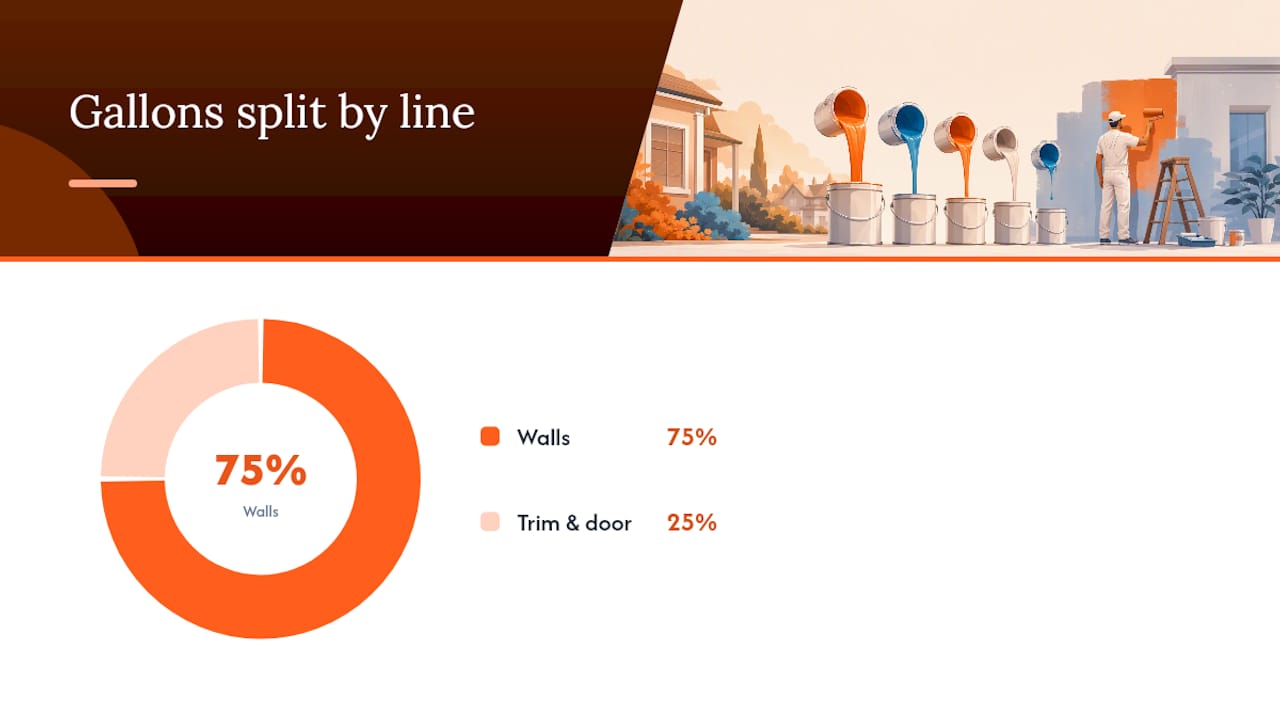
| Walls | 400 sq ft × 2 coats, coverage ~350 sq ft/gallon | 3 gallons |
| Trim & door | Detail work, separate production rate | 1 gallon |
| Prep | Patching, sanding, masking, one primer coat on repairs | 3 hours |
| Labor | Walls + trim/detail at burdened rate | labor hours |
| Materials | Paint, primer, tape, drop cloths, caulk | Sundries total |
| Overhead & profit | Applied to direct cost | Added to subtotal |
The gallons math follows a simple rule from the painting job pricing calculator: area times coats, divided by coverage per gallon, rounded up. So 400 square feet times two coats divided by 350 comes out just above two gallons, rounded to three because you never want to run short mid-wall. Labor hours get built the same way, from production rate per task, which is exactly why trim and walls appear as separate lines rather than one blended number.
Overhead gets added to direct costs (materials plus labor) as its own percentage, covering insurance, vehicles, and administrative time. Margin then gets applied using price equals cost divided by (one minus margin), not cost plus a flat percentage tacked on top. That distinction matters because “cost plus margin percent” quietly under-delivers the profit share the contractor actually intended, a mechanic explained in detail in the pricing calculator methodology.
When you email contractors for quotes, copy this checklist into the message: scope description, surfaces and square footage, coat count, named paint product, prep tasks expected, labor hours or crew days, materials included, timeline, deposit amount, and warranty terms. Three full sample estimates and a free template are available if you want to see this structure built out for exterior and cabinet jobs too.
How Cape Apex Painters documents a preparation-first quote
Cape Apex Painters builds quotes around a diagnostic visit first, not a drive-by estimate. Working across Cape Town, the Cape Winelands, and the Overberg, the team checks for damp, old coating failures, and substrate issues before a single price gets written down, then lists remediation as its own line item rather than folding it into a vague “prep” number.
Because Cape Apex uses a full-time, in-house team rather than subcontractors, labor hours in the quote reflect people who’ll actually be on your roof or wall, accountable to the same company that signed the contract. Paint lines get specified by name, chosen for coastal UV and salt exposure rather than a generic default, with damp-proofing appearing as a separately priced service where the diagnostic visit flags it.
What I look for first when I open a painting quote
I check three things before anything else: does the scope match what every other bidder quoted, is the paint product named rather than implied, and does prep get its own line with a written warranty attached. I once watched a homeowner nearly choose a bid $600 cheaper, until adding back the missing gutter-touch-up and second coat closed the gap entirely.
— Thinus
Get an itemized quote built the way this article describes
Everything above only matters if the contractor writing your quote actually follows it. Cape Apex Painters is built around exactly that discipline: a full-time in-house crew instead of rotating subcontractors, and a diagnostic visit that catches damp or old coating failures before pricing gets finalized, so the estimate you receive reflects the real condition of your walls, not a guess from the curb.

Two things set this process apart in practice. First, every quote separates prep and repair work from painting labor, so you see what damp remediation or crack repair actually costs rather than absorbing it into a padded per-coat rate. Second, paint products get specified by name and matched to Cape Town’s UV exposure, coastal salt air, and rain patterns, not picked from whatever’s cheapest that week.
If you’re ready to compare a real breakdown against the bids you already have, request a diagnostic visit through Cape Apex Painters. Have your property’s approximate square footage and any known problem areas (damp patches, peeling trim, previous repaint dates) ready, and expect a written, line-item quote back within a few days of the site visit.
Templates and calculators to check your own numbers
A few resources are worth bookmarking if you want to sanity-check any bid you receive. The painting estimate example and free template walks through three real sample estimates, interior, exterior, and cabinet work, with the full line-item math laid out. The painting job pricing calculator lets you rebuild a bid from area, coats, and labor rate yourself, which is the fastest way to spot a number that doesn’t add up. And the side-by-side quote comparison guide gives you a ready-made grid format for lining up multiple bids before you commit to any of them.