
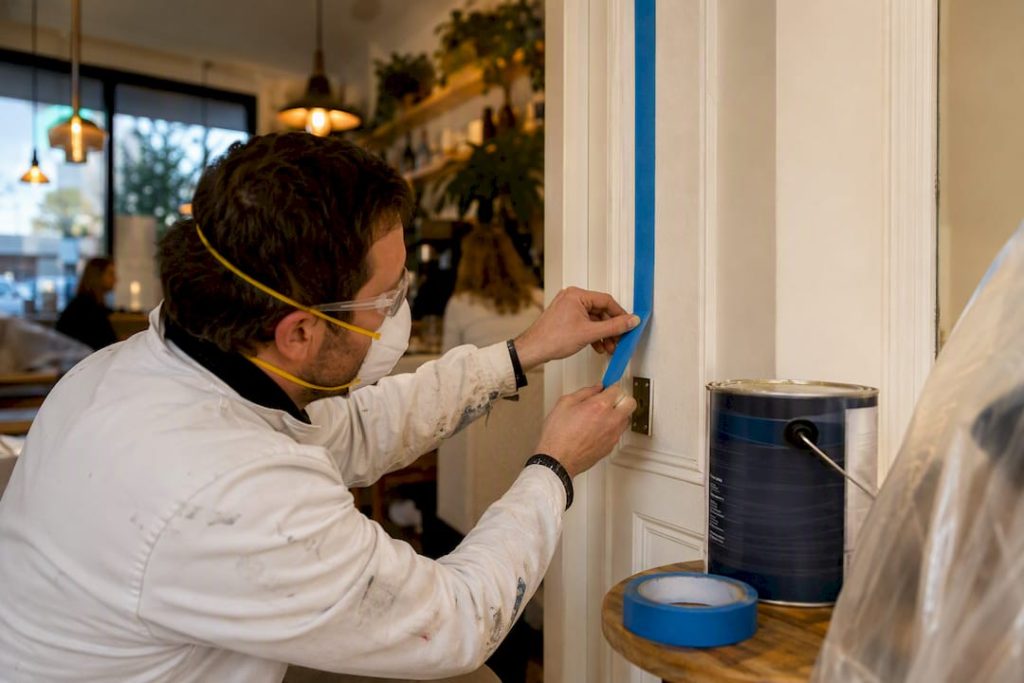
Yes, you can paint an occupied building safely with minimal disruption, and it takes three moving parts done right. First, build a staged schedule around off-hours and phased access. Second, specify low-VOC coatings and a real ventilation plan, since solvent-based systems can exceed 250 g/L VOC and demand evacuation. Third, isolate work zones and over-communicate with occupants. A prep-first crew like Cape Apex Painters builds all three into the bid before a brush touches a wall.
Key Takeaways
Painting occupied buildings safely comes down to staged scheduling, low-VOC product specification, and real ventilation controls tied to measured clearance rather than guesswork.
| Point | Details |
|---|---|
| Schedule around occupancy | Use off-hours and phased access so no single closure disrupts the whole building at once. |
| Specify low-VOC coatings | Choose water-based products, generally below 50 g/L VOC, for any space near occupants. |
| Tie re-entry to data, not smell | Base re-occupancy on product dry-time data and measured ventilation exchange, not subjective odour checks. |
| Require prep-first diagnostics | Insist bidders test for moisture and adhesion before quoting the coating scope. |
| Choose an in-house, prep-first crew | Cape Apex Painters builds staged scheduling and diagnostic assessment into every occupied-building bid. |
Table of Contents
- Before you start: a pre-mobilisation checklist
- How to build a schedule that keeps the building running
- How do you notify tenants before painting starts?
- Which paints control odour and VOCs in occupied spaces?
- Working methods that cut noise, dust, and odour
- What safety and compliance measures should you require?
- Why surface prep decides how long the paint job lasts
- What drives cost and how long should it take?
- When should you hire professionals instead of a DIY approach?
- What should a reputable contractor include in their bid?
- Contingency planning for unexpected issues or delays
- Waste disposal and environmental compliance during painting in occupied buildings
- On-site lessons learned: what typically goes wrong
- If you need a contractor built for occupied-building work
- Sources
Before you start: a pre-mobilisation checklist
Handle these before any contractor sets foot on site:
- Survey occupancy patterns and flag high-sensitivity zones (kitchens, medical suites, childcare rooms)
- Confirm whether lead testing applies for structures built before 1978
- Lock down secure paint storage, entry access, and emergency egress routes
- Request Safety Data Sheets (SDS) for every specified coating in advance
Pro Tip: Tenants resist schedule changes far less when you give them a reason tied to their comfort, not just a date. “We’re painting nights so your Tuesday meeting isn’t disrupted” lands better than a generic notice.
How to build a schedule that keeps the building running
Off-hours windows, nights, weekends, and holiday closures absorb the noisiest and smelliest work without touching occupied hours. Reserve daytime slots only for quiet micro-tasks like cutting-in trim in low-traffic corners.
A realistic staging approach looks like this:
- Common areas (lobbies, corridors): 2 to 4 nights per zone, including dry time
- Floor-by-floor office or residential work: one wing or floor at a time, rotating every 3 to 5 days
- Restrooms and shared facilities: never close both at once, alternate to keep one operational
Staged access and off-hours scheduling is what separates a smooth project from one that generates complaints by week two. Containment setup and teardown add time on both ends, and ventilation needs a ramp-up period before painting starts and a ramp-down period before anyone reoccupies the space. Build those buffers into the schedule rather than treating them as afterthoughts.
How do you notify tenants before painting starts?
Notify tenants, front desk staff, security, and facilities management, in that order, at least a week before mobilisation. A good notice covers dates and times, exactly which areas are affected, and where to find alternate restrooms or entrances during the closure.
On the logistics side:
- Coordinate delivery windows so painters’ vans and material drop-offs don’t collide with tenant move-ins
- Set up temporary signage and wayfinding for rerouted foot traffic
- Reserve parking or loading zones for the crew in advance
- Give the building’s single point of contact a printed copy of the week’s schedule
Contractors who specialise in occupied-space work lean heavily on staged access and clear communication precisely because most complaints trace back to a tenant who simply didn’t know what was coming.
Which paints control odour and VOCs in occupied spaces?
Water-based, low-VOC coatings are the default choice for occupied buildings, and industry guidance generally puts that threshold below 50 g/L of VOC. Solvent-based alkyds or epoxies, often used on high-traffic floors, routinely exceed 250 g/L and are not compatible with anyone breathing that air nearby.
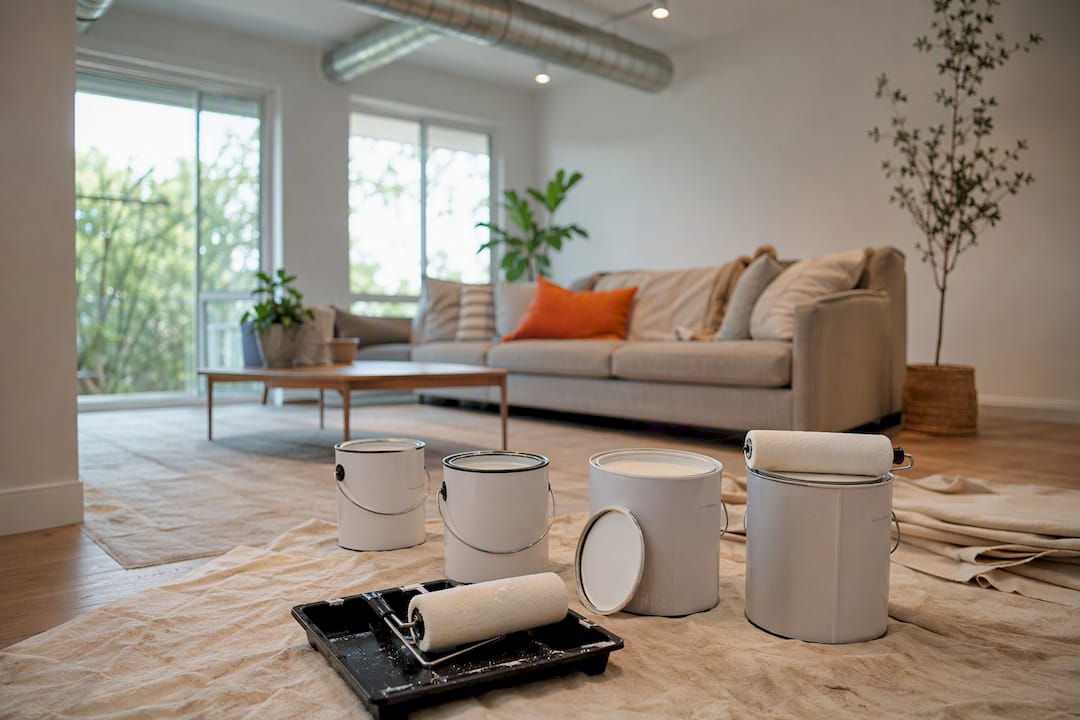
When a solvent system is genuinely unavoidable, treat it as an evacuation event: full area clearance, mechanical ventilation, and no reoccupation until measured air exchange, not smell, says it’s clear.
For water-based work, the ventilation plan still matters:
- Portable HVAC or fans to maintain airflow during application
- Negative pressure in containment zones to stop odour migration into occupied areas
- Exhaust routed away from intake vents and open windows nearby
Pro Tip: Ask for the SDS before you approve a product, not after. It tells you the actual re-entry time, not the contractor’s guess.
Working methods that cut noise, dust, and odour
Good crews sequence work so only one room or zone closes at a time, alternating bathrooms and shared facilities instead of shutting both down together. Containment barriers keep dust and fumes from bleeding into adjacent hallways.
Specific techniques that make a real difference:
- Battery-powered tools instead of generators or corded equipment that need extension cords across occupied corridors
- Vacuum sanding with HEPA capture instead of dry sanding that clouds a hallway in dust
- Low-odour formulations for any daytime work near occupied rooms
Pro Tip: Pair the loudest tasks, demolition, heavy sanding, with the latest night shift, and schedule a five-minute clean sweep after every session rather than one big cleanup at the end.
What safety and compliance measures should you require?
At minimum, insist on a written ventilation plan, PPE for every crew member, fire-hazard controls if any solvent-based product is on site, and clear signage marking restricted areas. Occupied commercial painting typically falls under OSHA worker-protection standards and, where applicable, EPA RRP rules for lead.
Documents to request before signing:
- SDS for every product on the job
- Evidence of lead testing where the building’s age triggers it
- A written respiratory protection summary
- Proof of the contractor’s internal safety programme, not just a verbal assurance
Why surface prep decides how long the paint job lasts
Damp patches, failed old coatings, rust, and contaminated substrates all need resolving before a single coat goes on, or you’re just repainting a problem instead of fixing it. That’s the entire logic behind a prep-first approach: diagnose first, coat second.
Build these into your acceptance criteria:
- Moisture readings on any wall with a history of damp
- A visible adhesion test patch before full application
- Consistent sheen and texture on all patched or repaired sections
What drives cost and how long should it take?
Access complexity, off-hours labour premiums, containment and ventilation rental equipment, and the scope of surface repairs are what actually move a quote up or down, not the paint itself. Staging adds calendar days but avoids shutting the whole building at once, which is usually the trade-off worth making.
When comparing bids, normalise these line items so you’re comparing like for like:
- Number of coats specified
- Square metres covered per staged phase
- Whether ventilation equipment rental is included or billed separately
- Surface-prep scope, since one bid’s “prep included” might mean a wipe-down and another’s means moisture testing and patch repair
When should you hire professionals instead of a DIY approach?
Small touch-ups in unoccupied areas are reasonable to handle in-house. Anything involving solvent-based coatings, negative-pressure containment, multi-floor staging, or a building with health-sensitive occupants needs a specialist crew.
Red flags that mean it’s time to call in professionals:
- The scope requires containment or negative-pressure ventilation
- Lead testing or healthcare-facility rules apply
- The work involves heights, scaffolding, or complex access.
What should a reputable contractor include in their bid?
A proposal worth signing includes an in-house team with no subcontractor handoffs, a diagnostic surface assessment, moisture testing, and a coating specification suited to your local climate. That’s the standard Cape Apex Painters builds every quote around, and it’s a fair benchmark to hold any bidder to.
A scope you can paste straight into an RFP should specify:
- Surface diagnostic and moisture assessment before pricing is finalised
- Low-VOC product specification with SDS attached
- A written ventilation and re-occupancy plan
- Documented staging schedule tied to occupant notification dates
Partner resources like Sigma Painting’s commercial prep guidance offer a useful second checklist to cross-reference against any contractor’s proposal.
Contingency planning for unexpected issues or delays
Every occupied-building project hits at least one surprise: hidden damp behind a wall, a coating that won’t cure in humid weather, or a tenant meeting that can’t move. Build slack into the schedule up front rather than discovering there isn’t any.
A workable contingency plan covers three scenarios. First, weather or humidity delays that push dry times past the data sheet’s estimate, which is common with water-based coatings in damp climates. Second, hidden substrate problems discovered mid-job, rot, unexpected rust, old lead paint, that require a stop-work moment for reassessment. Your contract should specify how change orders get approved fast, not after a week of back-and-forth. Third, occupant scheduling conflicts, a tenant event that can’t be moved, an emergency access need, that force a re-sequencing of staged zones.
The fix for all three is the same: name a single decision-maker on the building side and one on the contractor side, and agree upfront on how fast they can approve a schedule shift. Projects that stall usually aren’t stalled by the problem itself. They’re stalled by nobody having the authority to make a quick call. A contract clause tying re-occupancy to measured clearance rather than a fixed calendar date also prevents the worst version of this: someone moving back into a space before it’s actually ready.
Waste disposal and environmental compliance during painting in occupied buildings
Paint waste, empty containers, solvent rags, and sanding dust all need proper handling, and occupied buildings raise the stakes because residents or staff are nearby while it happens. Leftover paint and solvent-soaked materials count as hazardous waste in most jurisdictions and can’t go in a standard dumpster, especially anything solvent-based.
A compliant contractor separates waste streams on site: water-based paint waste, solvent-based waste, and general debris each go into their own labelled containers. Rags used with solvent-based products need sealed, fire-rated storage until disposal, since oily rags are a genuine spontaneous-combustion risk if left balled up in a bin overnight.
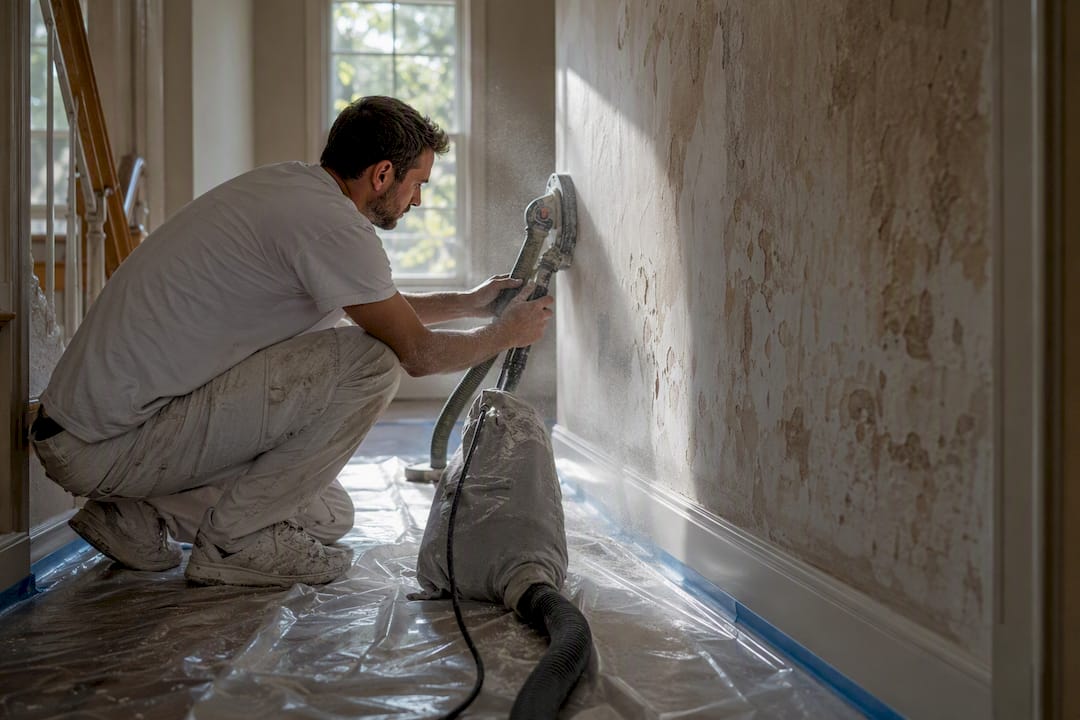
Dust containment matters just as much as chemical waste. Sanding old coatings, particularly on pre-1978 structures where lead is a possibility, needs HEPA-filtered vacuum capture rather than open sweeping that sends particles into occupied corridors. Ask any bidder how they handle sanding debris before you sign, not after the first dusty hallway complaint.
Final turnover deserves its own line item. Scheduling a proper post-paint clean, removing dust and paint residue as part of the handover rather than leaving it to building staff, cuts down on rework and stops the “it still smells like paint” complaints that show up days after the crew has left. Building this into the contract scope, rather than treating it as a nice-to-have, is one of the cheapest ways to avoid a bad final impression on an otherwise well-run job.
On-site lessons learned: what typically goes wrong
Most schedule overruns trace back to one thing: containment that wasn’t sealed tight enough, letting odour drift into occupied zones and forcing a stop-work conversation nobody planned for. Communication breakdowns are the second-most common failure, usually a tenant who never got the notice. The lesson that sticks: never let a crew start without a signed-off moisture reading and a dry-time clause tied directly to the product’s own data sheet, not a guess.
If you need a contractor built for occupied-building work
Cape Apex Painters runs projects the way this article just described: staged scheduling, low-VOC specification, and a full-time in-house crew with no subcontractor handoffs across Cape Town, the Cape Winelands, and the Overberg. That last part matters more than it sounds. A subcontracted crew changes every week; an in-house team stays accountable to the same standard from the diagnostic visit through final clean-up.

Every project starts with a diagnostic surface assessment, checking for damp, old coating failures, and substrate issues before a quote gets written, not after. That’s how a tailored staging plan and a documented ventilation approach get built into your bid instead of bolted on halfway through the job. If you’re planning painting work in an occupied home, estate, or commercial property, request an on-site assessment and quote from Cape Apex Painters and get a schedule built around your building’s actual occupancy, not a generic timeline.
Sources
- Painting in occupied spaces — National Painting Authority
- Post-construction cleaning — Atelier Maids