
Painters Constantia – How to Prepare Damp Walls, Timber and Boundary Walls Before Repainting
Constantia homes are often beautiful, mature and valuable properties with large gardens, shaded walls, timber features, long boundary walls, older plaster, rooflines and established landscaping. Those same features that make the area attractive can also make repainting more difficult. Shade slows drying. Irrigation keeps garden walls damp. Timber moves with the seasons. Winter rain exposes roofline defects. Boundary walls absorb moisture from soil and planted beds.
As Painters Constantia, Cape Apex Painters sees the same pattern repeatedly: paint fails early when damp walls, timber and boundary walls are treated like normal dry plaster and simply given another coat. A lasting repaint starts before the paint is opened. It starts with diagnosis, preparation and correcting the cause of failure.
This article explains how Constantia homeowners, estate owners, landlords, trustees and property managers should think about damp walls, timber and boundary walls before repainting. For wider area context, visit our Cape Southern Suburbs Painters hub.
Why Constantia Homes Often Fail at Damp Walls, Timber and Boundary Walls
Constantia sits in one of Cape Town’s greener, more shaded residential belts. Many homes have mature trees, large lawns, planted beds, boundary walls, retaining walls, timber windows, timber doors, pergolas, decks, fascias and exterior trims. These surfaces do not all behave the same way.
Damp walls fail because moisture is still moving through or behind the wall. Timber fails when old coatings, movement, UV, moisture and poor preparation are ignored. Boundary walls fail because soil, irrigation and drainage problems push moisture from behind. When these causes are not corrected, the new paint inherits the same problem as the old paint.
This is why preparation-first painting matters so much in Constantia. The right coating system can only perform if the surface is clean, dry, sound, stable and correctly prepared.
Paint Does Not Fix Active Damp
The most important rule is simple: paint does not fix active damp. Paint is a finish. It can protect a sound, dry, properly prepared surface, but it cannot stop moisture that is entering from the ground, soil, irrigation, rooflines, plumbing, condensation or poor ventilation.
If a damp wall is painted before the moisture source is resolved, the moisture continues moving. It can cause blistering, bubbling, peeling, staining, mould, salts and repeated failure. That is why damp must be diagnosed before repainting.
Our damp proofing service is closely connected to exterior painting in areas like Constantia, where mature gardens, shaded walls and boundary-wall moisture are common.
How to Identify Damp Before Repainting
Before repainting, look for warning signs such as bubbling paint, blistering, peeling in repeated patches, tide marks, dark staining, white powdery salts, musty smells, mould that returns after cleaning, damp cupboards, cold walls, flaking at the base of walls and paint that fails in the same area every few years.
If a wall remains cool and damp to the touch days after rain, or if paint keeps lifting in the same place, the problem is not only cosmetic. The wall may be too damp to repaint safely until the cause is diagnosed and corrected.
Boundary Walls, Garden Walls and Retaining Walls
Boundary walls, retaining walls and garden walls are some of the most common repeated failures in Constantia. They often have soil, planted beds, irrigation or lawns on one side and paint on the other. Moisture enters from behind or below, then pushes outward through the plaster and coating.
Retaining walls need special attention because they hold soil and water pressure on the hidden side. Painting the visible face without understanding the moisture path is usually a short-term repair. The wall must be assessed for drainage, soil contact, waterproofing details, cracks, salts and drying time before coating.
Irrigation, Soil Levels and Mature Gardens
Many Constantia “paint problems” are partly garden problems. Irrigation spraying directly onto walls, planted beds banked against plaster, soil levels rising above damp-proofing details and poor drainage can all keep walls wet.
Before repainting a boundary or garden wall, it may be necessary to adjust irrigation, pull soil away from the wall, improve drainage or allow the wall to dry properly. Without that, the paint may look good for a short period and then peel, blister or discolour again.
Shaded Walls, Mould and Algae
Shaded Constantia walls dry slowly after rain and irrigation. Mature trees, hedges and garden planting reduce airflow and sunlight. This encourages mould and algae growth on exterior walls and sometimes on interior walls near damp or poorly ventilated rooms.
Mould and algae cannot simply be painted over. They must be treated, cleaned and allowed to dry before repainting. If growth remains under the coating, it can return through or below the new paint and cause staining or early failure.
How to Prepare Constantia Boundary Walls Before Painting
Preparing a Constantia boundary wall properly means dealing with moisture first and paint second. The process should begin with a diagnostic inspection: where is the water coming from, is irrigation hitting the wall, is soil built up against it, are there cracks, are there drainage problems, and is the existing coating still sound?
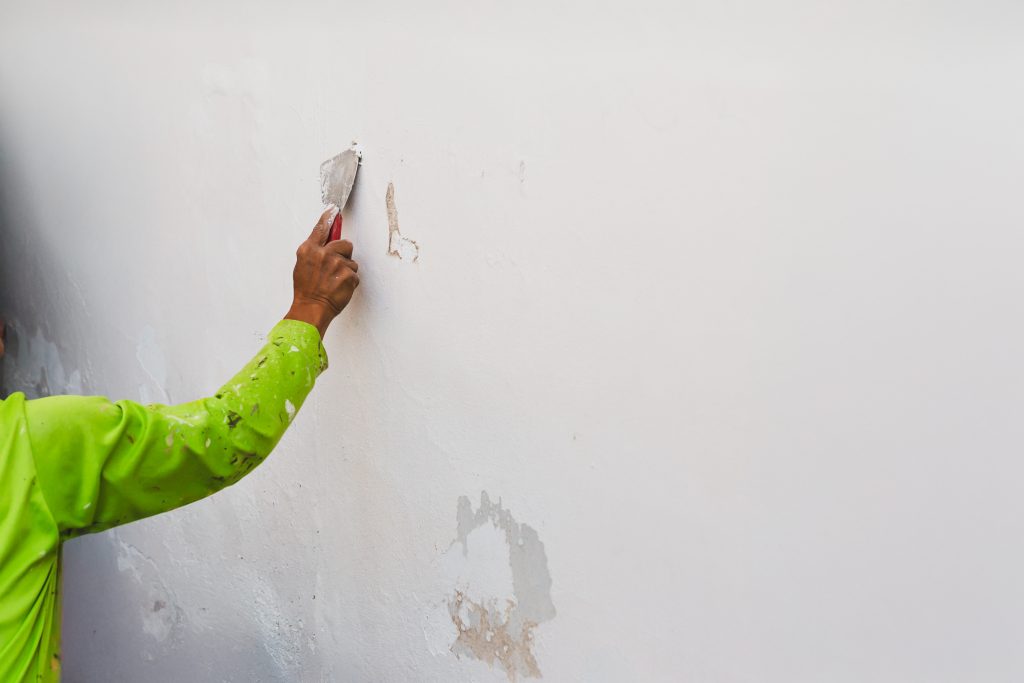
Once the cause is understood, failing paint should be removed back to a stable surface. Cracks should be repaired correctly. Dirt, salts, mould and algae should be cleaned and treated. The wall must be allowed enough drying time. Only then should suitable damp-related preparation, priming and exterior coating systems be used.
This is where exterior painting and damp proofing work together. A thicker coat of ordinary paint is not a solution for a damp boundary wall.
How to Prepare Timber Windows, Doors, Pergolas, Decks and Fascias
Timber behaves differently from plaster. Constantia homes often include timber windows, doors, pergolas, decks, fascias, shutters, trims and exterior joinery. These surfaces expand, contract, crack, absorb moisture and weather under sun and rain.
Proper timber preparation starts with assessing the existing coating. Is it paint, varnish, oil, stain or a specialist finish? Is it sound, cracked, greyed, flaking, blistered or failing? A light sand may be enough for a sound surface, but failed coatings usually need heavier sanding, scraping or stripping before recoating.
Damaged timber, open joints, exposed end-grain, soft areas and weathered sections must be repaired before the finish coat. The correct primer or timber system must then be used for the exposure. Treating timber like a plaster wall is one of the fastest ways to create early failure.
Our residential painting work in Constantia includes this type of surface-specific preparation.
Rooflines, Gutters, Flashings and Winter Rain Problems
Not every damp wall starts at ground level. In Constantia, winter rain can expose roofline problems that show up as damp staining or peeling paint lower down. Blocked gutters, cracked ridge caps, failed flashings, parapets, leaking roof-to-wall junctions and overflowing downpipes can all send water into walls.
There is little value in repainting a wall if water is still entering from above. Rooflines, gutters and flashings should be checked before major exterior painting. Roof painting does not fix active leaks. The defect must be repaired before the coating system is applied.
Cracks, Chalking and Weak Previous Paint Layers
Constantia homes can also have older plaster, multiple repaint layers, hairline cracks, sun-exposed chalking and weak previous coatings. If new paint is applied over loose, powdery or poorly bonded layers, the new coating is only as strong as the failing layer below it.
Cracks should be opened and repaired correctly, not only skimmed over. Chalking should be washed off and stabilised where needed. Old flaking paint should be removed back to a sound surface. These preparation steps are often what separate a repaint that lasts from one that fails early.
Rust on Gates, Railings, Garage Doors and Metalwork
Constantia homes often include gates, garage doors, railings, balustrades, burglar bars and other metalwork. In damp, shaded garden settings, rust can start at welds, lower edges, joints and exposed corners.
Painting over active rust does not stop corrosion. Rust expands under the paint and lifts the new coating. Metalwork should be de-rusted, treated and primed correctly before top coats are applied.
Interior Damp, Bathrooms, Kitchens and Poor Ventilation
Damp preparation is not only an exterior issue. Interior walls in bathrooms, kitchens, cupboards, shaded rooms and poorly ventilated areas can develop condensation, mould and damp staining. These problems are common where rooms are shaded, airflow is limited or moisture is not extracted properly.
Interior damp cannot be fixed with paint alone. Ventilation, extraction, leaks, condensation and mould must be addressed first. Then surfaces can be treated, dried, prepared and repainted with the correct interior system. For related work, see our interior painting service.
Why Premium Constantia Homes Need a Written Diagnostic Report
On a large or premium Constantia property, guessing is expensive. A proper quotation should be supported by a written diagnostic report that records damp areas, roofline concerns, timber condition, boundary-wall moisture, retaining-wall concerns, cracks, chalking, rust, mould, algae and old coating adhesion.
This report helps the homeowner understand why paint has failed and what preparation is required before repainting. It also forms the basis of a clear written scope of work so there are no surprises once work begins.
For estates, managed properties and shared spaces, the same principle applies through our body corporate and estate painting approach.
Exterior Painting, Damp Proofing and Roof Painting Must Work Together
On Constantia homes, exterior painting, damp proofing and roof painting are connected. A roofline defect can create damp walls. A wet boundary wall can cause repeated peeling. A timber fascia can fail because water is entering at the roofline. Interior stains may trace back to exterior moisture.
Lasting repainting means sequencing the work correctly: diagnose the cause, resolve damp and roof defects, prepare the surface, then apply the right coating system. Provided damp, cracking, rust, contamination, poor adhesion, mould and algae are resolved first, properly prepared paintwork can maintain integrity for approximately 8 to 10 years. Roof coating systems can maintain integrity for approximately 7 to 8 years where qualifying specifications are followed and roof defects are fixed first.
Constantia, Bishopscourt, Newlands and Nearby Southern Suburbs Conditions
Constantia shares damp, shade and garden-wall conditions with nearby Southern Suburbs areas, including Bishopscourt, Newlands, Rondebosch, Claremont and Tokai.
The Constantia difference is the strong combination of large properties, estate-style homes, mature gardens, long boundary walls and timber features. This makes surface preparation, moisture diagnosis and finish protection especially important.
How Cape Apex Painters Prepares Constantia Homes for Repainting
Cape Apex Painters uses a preparation-first process for Constantia homes. We inspect the surfaces first, provide a written diagnostic report and prepare a clear scope before work begins.
- We identify damp sources before repainting damp walls.
- We assess boundary walls, garden walls and retaining walls for moisture movement.
- We check irrigation, soil levels, drainage and shaded wall conditions.
- We inspect timber windows, doors, decks, pergolas, fascias and trims.
- We check rooflines, gutters, flashings and parapets before exterior coating.
- We remove loose paint, chalking and weak old coatings before repainting.
- We treat mould, algae and rust properly before coating.
- We use supplier and manufacturer-backed coating specifications where applicable.
- We protect floors, paving, pool surrounds, glass, timber, gardens and exterior finishes during work.
The work is carried out by full-time employed painters, never subcontractors, with a working foreman on site daily. We provide direct accountability, daily site protection and daily clean-up. Cape Apex Painters carries Public Liability Insurance through OUTsurance and is not a lead-generation company.
Why Choose Cape Apex Painters for Constantia Painting?
Cape Apex Painters serves Constantia, the Cape Southern Suburbs and wider areas from Cape Town to Blaauwberg, Helderberg, Cape Winelands and Overberg. Our services include exterior painting, interior painting, roof painting, damp proofing, residential painting and estate-related painting.
- Full-time employed painters, never subcontractors.
- Working foreman on site daily.
- Written diagnostic report with every quotation.
- Clear written scope of work.
- Preparation-first approach for damp walls, timber and boundary walls.
- Supplier and manufacturer-backed coating specifications where applicable.
- Public Liability Insurance through OUTsurance.
- Direct contact details and accountability.
- Daily site protection and clean-up.
- 20+ years of painting experience.
- Not a lead-generation painting company.
You can view our full services, browse all service areas or return to the main Painters Cape Town homepage.
Talk to a Constantia Painting Contractor Who Prepares Properly
If your Constantia home keeps failing at the same damp walls, timber, boundary walls or shaded areas, the answer is not another coat over the same problem. The answer is to diagnose and prepare those surfaces correctly before repainting.
Cape Apex Painters can inspect your damp walls, timber, boundary walls, rooflines, metalwork and shaded areas, provide a written diagnostic report and prepare a clear scope of work.
Call 081 762 0437 or visit the Cape Apex Painters contact page to request a Constantia painting quotation.
Constantia Damp Walls, Timber and Boundary Wall Painting FAQs
Why do Constantia boundary walls peel so often?
Constantia boundary walls often peel because moisture enters from behind or below through soil, planted beds, irrigation, poor drainage or failed waterproofing. Paint applied over active moisture will usually fail again.
Can I repaint over damp walls?
No. Paint does not fix active damp. The moisture source must be diagnosed and resolved before repainting, otherwise the paint can bubble, peel, stain or flake again.
How do I know if a wall is too damp to paint?
Warning signs include bubbling, blistering, repeated peeling, tide marks, white salts, mould, musty smells, dark patches and walls that remain cool or damp days after rain.
Why does irrigation cause paint failure on garden walls?
Irrigation can keep walls wet for long periods, especially when sprinklers hit the wall directly or soil is built up against plaster. This moisture pushes the coating off from behind.
How do mature gardens affect exterior paintwork?
Mature gardens create shade, reduce airflow, hold moisture and often include irrigation near walls. These conditions can encourage damp, mould, algae and boundary-wall paint failure.
Why do shaded Constantia walls grow mould and algae?
Shaded walls dry slowly after rain and irrigation. This creates ideal conditions for mould and algae. The growth must be treated and cleaned before repainting.
How should boundary walls be prepared before painting?
The moisture source should be diagnosed first. Loose paint, salts, dirt, mould and algae should be removed, cracks repaired, the wall allowed to dry and the correct damp-related preparation and coating system applied.
Do retaining walls need special preparation before painting?
Yes. Retaining walls often have soil and water pressure behind them. Drainage, moisture movement, salts and the condition of the existing coating should be assessed before repainting.
Do timber windows and doors need special preparation?
Yes. Timber windows and doors need proper cleaning, sanding, repairs, priming or suitable timber coating systems. Timber cannot be prepared in the same way as plaster.
How should pergolas, decks and fascias be prepared before painting?
Failed coatings should be removed, timber should be sanded and repaired, open joints and exposed end-grain should be treated, and the correct exterior timber system should be used.
Why should rooflines and gutters be checked before exterior painting?
Roofline defects such as blocked gutters, failed flashings, cracked ridge caps and leaking junctions can cause damp and peeling on walls below. These defects should be fixed before painting.
What causes paint to chalk on Constantia exterior walls?
Chalking happens when UV and age break down the surface of an old coating into powder. New paint cannot bond properly to chalk, so it must be washed off and stabilised where needed.
Should old flaking paint be removed before repainting?
Yes. Loose, flaking or poorly bonded paint must be removed or stabilised before repainting. New paint applied over a weak layer will fail with that layer.
Is rust treatment needed before painting gates and railings?
Yes. Rust must be removed, treated and correctly primed before painting. Painting over active rust allows corrosion to continue under the coating.
Can interior damp be fixed with paint?
No. Interior damp usually comes from condensation, poor ventilation, leaks or moisture movement. The cause must be corrected before the wall is treated and repainted.
How long should properly prepared Constantia paintwork last?
Where damp, cracks, rust, contamination, poor adhesion, mould and algae are resolved first and surfaces are properly prepared, paintwork can maintain integrity for approximately 8 to 10 years. Roof coatings can maintain integrity for approximately 7 to 8 years where qualifying specifications are followed and roof defects are fixed first.
Do you provide a written diagnostic report?
Yes. Cape Apex Painters provides a written diagnostic report with every quotation so clients can understand damp, timber, boundary-wall, roofline and coating issues before repainting starts.
Do you use subcontractors?
No. Cape Apex Painters uses full-time employed painters, not subcontractors. A working foreman is on site daily.
How do I request a Constantia painting quote?
Call 081 762 0437 or visit the Cape Apex Painters contact page to arrange a Constantia painting quotation.