
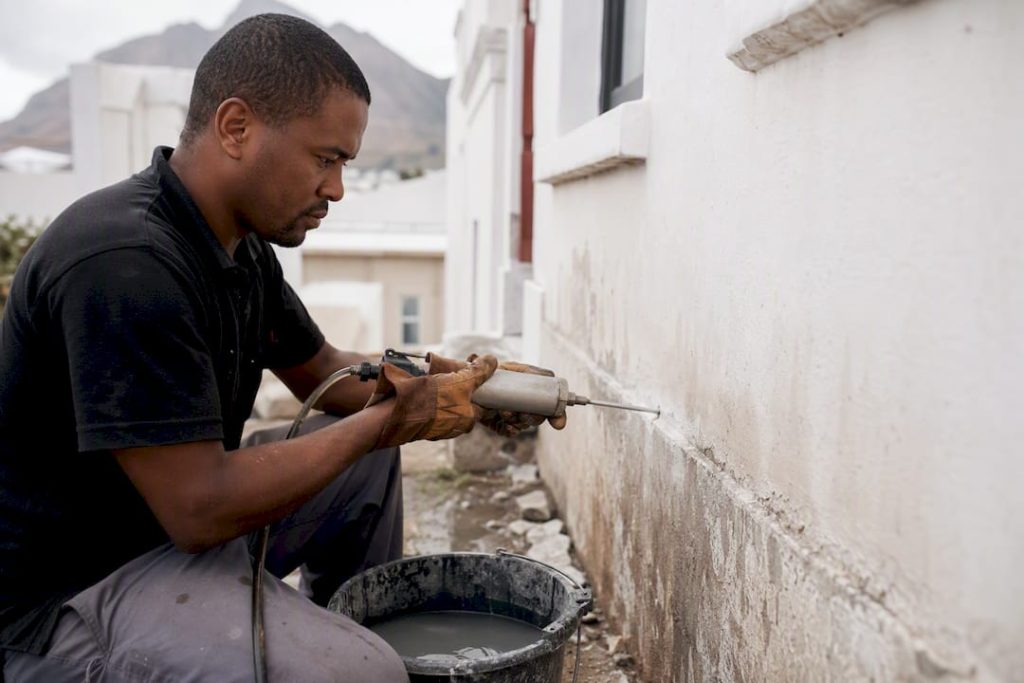
Chemical DPC injection alone typically runs R350 to R600 per linear metre, while full treatment that includes stripping and replastering climbs to R900 to R1,600 per metre. Wall damp-proof coatings and membranes are usually priced by the square metre instead, landing between R600 and R1,200 per m² depending on access and finish. A failed bathroom membrane replacement, one of the more expensive surprises, often lands at R12,000 to R25,000 once strip-out is factored in.
Contractors quote per linear metre for DPC injection work and per square metre for membranes and tanking, so a like-for-like comparison depends on knowing which unit applies to your job.
Before you sign anything:
- Book a site inspection so a contractor can see the actual extent of the damp, not just guess from a photo.
- Insist on an itemised, written quote that separates diagnosis, injection, replastering, and painting.
- Ask what the warranty covers and for how long.
Pro Tip: Never accept a phone quote for damp work. The price swings too much based on wall height, salt contamination, and access, and a contractor who skips the site visit is usually guessing.
Key Takeaways
Getting damp proofing right in South Africa means matching the treatment to the actual cause, pricing it by the correct unit, and insisting on preparation before any cosmetic finish.
| Point | Details |
|---|---|
| Injection alone | Costs R350 to R600 per metre when plaster is still sound. |
| Full treatment costs more | Injection plus replastering typically runs R900 to R1,600 per metre. |
| Bathrooms are pricier | Failed membrane replacement often costs R12,000 to R25,000 due to strip-out access. |
| Get an itemised quote | Insist diagnosis, injection, replastering, and painting are priced separately, with exclusions listed. |
| Preparation-first wins long term | Capeapexpainters treats damp and old paint failures before applying new coatings, avoiding repeat repairs. |
Table of Contents
- What does damp proofing cost by treatment type?
- What drives the price of a damp proofing quote?
- What do typical damp proofing projects actually cost?
- How do you get an accurate damp proofing quote?
- Can you DIY damp proofing, or do you need a professional?
- Why does preparation-first practice matter when choosing a contractor?
- An honest read on what these numbers actually mean
- Get a proper damp diagnosis before you spend a rand on paint
- Frequently asked questions
- Sources
What does damp proofing cost by treatment type?
Rising damp is the most common complaint in older Cape properties, and it has two standard fixes. Chemical DPC injection on its own, without replastering, sits at R350 to R600 per metre and works when the plaster itself is still sound and salt staining is minimal. Once the plaster has blown or salts have crystallised through the wall, injection has to be paired with stripping and replastering, and that combination typically costs R900 to R1,600 per metre. Some local guides quote interior work slightly differently, at R450 to R1,100 per metre, with exterior treatment a touch cheaper at R350 to R890 per metre. The gap between guides comes down to regional labour rates and how much plaster removal is included.
Penetrating damp from outside, often caused by cracked render, poor flashing, or a blocked gutter dumping water against a wall, gets treated with external sealers and detail work. Simple wall coatings run R80 to R150 per m², while parapet and flashing repairs are priced closer to R220 to R400 per metre.
Condensation is different again. It rarely needs chemical treatment at all, and the fix is usually ventilation and extraction, not a damp course.
Tanking and full waterproofing membranes for basements or retaining walls sit at the top of the range, often exceeding R1,200 per m² depending on the membrane specified and how much excavation access is needed.
| Treatment | Typical unit | Cost band |
|---|---|---|
| DPC injection only | Per linear metre | R350 to R600 |
| Injection plus replastering | Per linear metre | R900 to R1,600 |
| Wall damp coating | Per m² | R80 to R150 |
| Parapet/flashing repair | Per metre | R220 to R400 |
| Tanking/basement membrane | Per m² | R600 to R1,200+ |
| Bathroom membrane replacement | Per project | R12,000 to R25,000 |
What drives the price of a damp proofing quote?
Two quotes for the “same” job can differ by thousands of rands, and it usually comes down to five factors.
- Extent of damage: a wall with heavy salt attack needs more stripping and neutralisation than one with early-stage staining.
- Preparation scope: removing old plaster, treating salts, and repairing structural cracks all add labour hours before any injection happens.
- Access: double-storey walls, tight side passages, or fitted furniture that has to be moved push scaffolding and site protection costs up.
- Material specification: premium membranes and branded injection creams cost more than generic alternatives, and that difference shows up on the final invoice.
- Labour and region: labour and access are consistently cited as major cost drivers, and rates in the Western Cape often run higher than inland regions because of demand and travel time between sites.
Pro Tip: Ask upfront whether VAT and scaffolding are included in the quoted figure. Those two line items alone can add 15 to 20 percent to a number that looked competitive on paper.
What do typical damp proofing projects actually cost?
Numbers mean more once you attach them to a real scenario.
- A single affected wall, injection only, no replastering: roughly R3,500 to R8,000, done in a day or two.
- A multi-room rising damp job with injection, replastering, and repainting: often R15,000 to R40,000 total, spread over one to two weeks once drying time is factored in.
- A failed bathroom membrane, full strip-out and re-tile: R12,000 to R25,000, largely because access to the substrate drives most of the labour.
- A 40 m² flat roof waterproofing job: R12,000 to R24,000 depending on whether an old membrane needs stripping first.
Build in a 10 to 15 percent contingency for hidden defects. Wall cavities and old plaster rarely reveal their full condition until the first layer comes off.
How do you get an accurate damp proofing quote?
Getting quotes that actually compare against each other takes a bit of discipline on your side too.
- Request a physical site inspection before any number gets written down.
- Ask for the quote broken into diagnosis, injection, replastering, and repainting as separate line items.
- Confirm what’s excluded, typically scaffolding, VAT, and specialised structural repairs.
- Ask about the warranty period and what voids it.
- Convert every quote to the same unit, either total rand per metre or total rand per m², before comparing.
Watch for these red flags:
- No site visit offered before pricing.
- A single lump sum with no breakdown.
- No mention of a workmanship guarantee.
This mirrors general advice on reviewing quotations for like-for-like transparency, which applies just as well to damp work as it does to other trades: separate scope, separate price, no bundling.
Can you DIY damp proofing, or do you need a professional?
Waterproof paint from the hardware store looks like a fix, but it’s a bandage. It can trap moisture behind the coating instead of resolving the source, and salts keep working through the wall until the paint blisters and the problem reappears, usually worse than before.
DIY is reasonable for condensation, better ventilation, an extractor fan, opening windows during cooking or showering. It’s not reasonable for rising damp, salt contamination, or a leaking membrane. Those need preparation-first treatment: salt neutralisation, correct injection depth, and replastering with the right mix. Skipping that step to save money now usually means paying for the same wall twice.
Why does preparation-first practice matter when choosing a contractor?
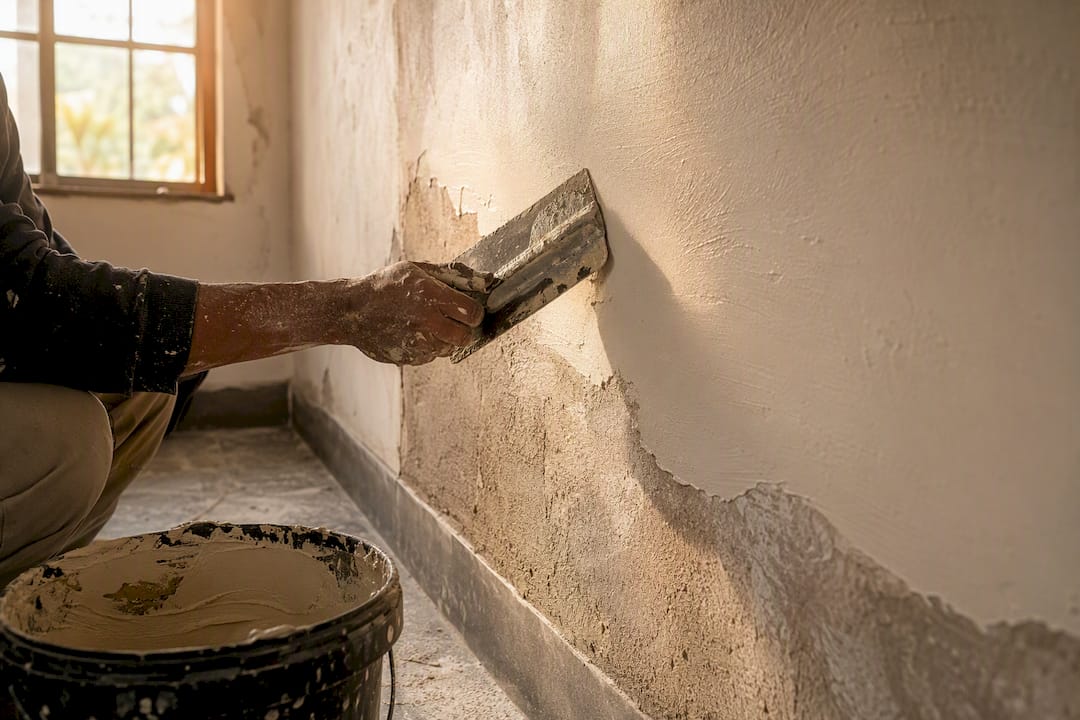
The gap between a job that lasts and one that fails again in eighteen months almost always comes down to preparation. Damp masked by a quick paint job returns. Damp treated after proper stripping, salt neutralisation, and correct injection tends to stay gone.
- Capeapexpainters employs a full-time in-house team rather than subcontractors, which keeps accountability with one crew from diagnosis through to final coat.
- Their process addresses damp and old paint failures before any new coating goes on, rather than painting over a problem.
- They handle residential, commercial, and specialised damp-proofing work across Cape Town, the Cape Winelands, and the Overberg.
A wall that’s been properly stripped, treated, and replastered before painting will outlast one that’s had a quick coat of “waterproof” paint slapped over an unresolved problem, especially in a climate with this much salt-laden coastal air working against it.
When you’re vetting any contractor, ask for examples of completed projects and how long their warranty period runs. That’s the same standard you’d apply to any trade working on your walls.
An honest read on what these numbers actually mean
The conventional advice on damp proofing tends to fixate on the injection price alone, as if R350 to R600 a metre is the whole story. It isn’t. The real cost driver is almost always preparation: how much plaster has to come off, how deep the salt contamination runs, and whether the wall was ever properly dried out before anyone touched it with a coating.
What gets underrated is how often a cheap quote turns expensive within two years, because the contractor skipped salt neutralisation or replastered over damp masonry to save a day’s labour. What gets overrated is the injection chemical itself, brands matter less than most marketing suggests, while workmanship and drying time matter enormously.
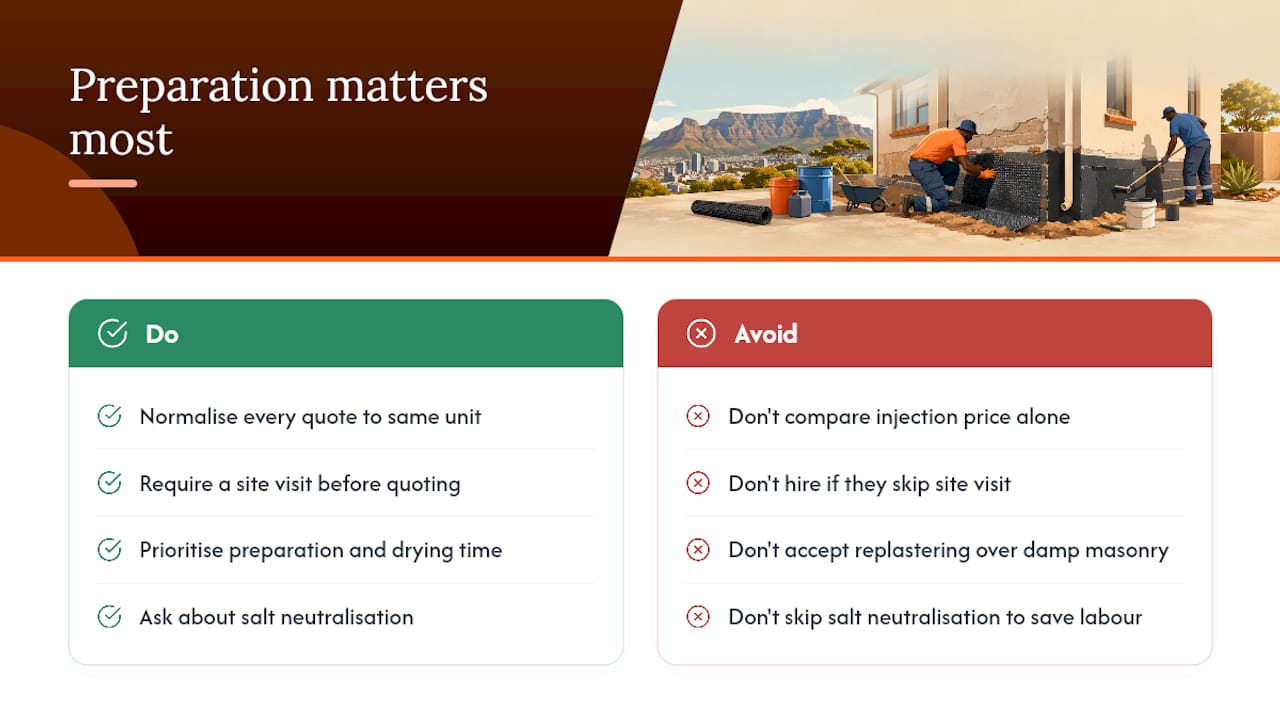
If you take one thing from the ranges above, it’s this: normalise every quote to the same unit before comparing, and treat any contractor who skips the site visit as a contractor to cross off your list. Preparation-first isn’t a premium add-on. It’s the difference between paying once and paying twice.
Get a proper damp diagnosis before you spend a rand on paint
Capeapexpainters is the alternative to guessing your way through a damp problem with a tin of waterproof paint. For homeowners and property managers across Cape Town, the Cape Winelands, and the Overberg, the practical difference is a full-time in-house crew that diagnoses the cause first, whether it’s rising damp, a failed membrane, or a leaking parapet, and only then specifies the coating system suited to Cape Town’s salt air and UV exposure.

If you’ve read this far because a wall in your home or building has been giving you trouble, the next step is simple: request a site inspection and itemised quote from Capeapexpainters before committing to any treatment. You’ll get a written scope that separates diagnosis, injection, replastering, and painting, so you know exactly what you’re paying for and why.
Frequently asked questions
How much does damp proofing cost per metre in South Africa?
Chemical DPC injection alone typically costs R350 to R600 per linear metre. Add stripping and replastering and the range moves to R900 to R1,600 per metre.
Is damp proofing priced per m² or per metre?
Linear treatments like DPC injection are priced per metre. Membranes, tanking, and wall coatings are priced per square metre, usually R80 to R1,200 depending on the system.
What is the average total cost for a damp house in South Africa?
A multi-room rising damp job including injection, replastering, and repainting often totals R15,000 to R40,000, depending on extent and access.
Can I fix rising damp myself with waterproof paint?
Waterproof paint alone rarely solves rising damp. It can trap moisture behind the surface and mask the problem until it resurfaces, usually with more damage than before.
What should be included in a damp proofing quote?
A proper quote separates diagnosis, injection, replastering, and painting, lists exclusions like scaffolding and VAT, and states the warranty period in writing.
Sources
- Damp proofing prices in South Africa – DPC injection and replastering costs per metre (BuildingPricesSouthAfrica)
- Waterproofing cost guide and calculator (Fonster)
- Rising damp treatment in South Africa — professional guidance (Safeguard Chemical)
- Guidance on damp-proofing treatment costs and quote transparency (ID guidance page)