
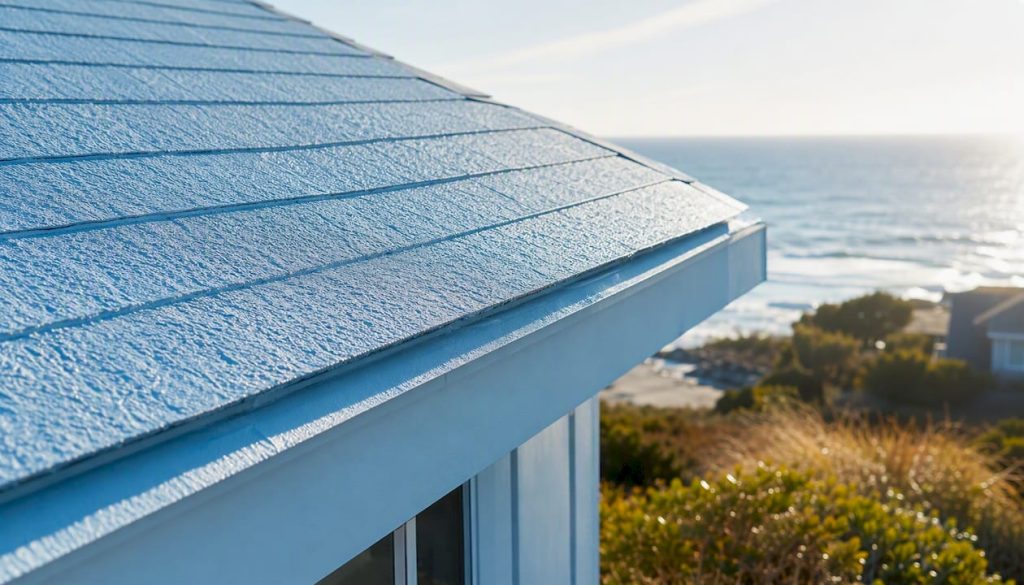
Choose a light-to-medium cool colour with a PVDF or cool-pigment finish. That single decision cuts summer heat gain while resisting the fade and corrosion that coastal air throws at every roof. Three moves get you there:
- Pick a colour with a published solar reflectance (SR) rating, not just a swatch you like the look of.
- Specify PVDF (Kynar 500 or Hylar 5000) or a Thermatech-style cool-pigment coating over a Galvalume or aluminium substrate.
- Confirm the warranty covers coastal salt exposure before you sign anything.
In most warm coastal climates, summer cooling savings outweigh any winter heating penalty by a wide margin, which is really the whole argument in one sentence.
Key Takeaways
Cutting summer heat on a coastal roof comes down to one combination: a light-to-medium cool colour paired with a PVDF or cool-pigment coating over a corrosion-resistant substrate.
| Point | Details |
|---|---|
| Colour selection | Light-to-medium cool tones reflect the most heat while medium tones better mask salt streaking. |
| Know the ratings | Ask for SR, thermal emittance, and SRI numbers on any product before buying. |
| Specify the right coating | PVDF (Kynar 500/Hylar 5000) or cool-pigment systems like Thermatech hold colour and reflectance far longer near the coast. |
| Match the substrate | Galvalume or aluminium substrates resist salt corrosion better than plain galvanized steel. |
| Maintain it consistently | Freshwater rinsing and prompt touch-ups protect both warranty coverage and reflectance over time. |
| Work with a specialist | Cape Apex Painters offers in-house teams and preparation-first repairs for coastal roof coating projects in Cape Town, the Winelands, and the Overberg. |
Table of Contents
- Best roof colours for reducing coastal heat
- Why colour changes how hot your roof actually gets
- Which coatings and substrates hold up on the coast
- Winter penalty, solar panels, and the aesthetics trade-off
- A 9-point checklist for choosing your roof colour
- Keeping coastal roofs cool and corrosion-free over time
- What kind of savings can you actually expect?
- How a professional preparation and application process works
- Get your roof colour and coating specified properly
- Frequently asked questions
- Sources
Best roof colours for reducing coastal heat
Colour choice isn’t just about looks. It’s a trade-off between reflectance, fade resistance, and how forgiving a tone is when salt spray leaves its mark.
- Polar white / surfmist tones — the top performers, often reflecting 70 to 85 percent of solar radiation. Best fade resistance, but salt residue and dust show up faster on stark white.
- Light grey / ash — nearly as reflective, with better camouflage for dust streaks and roof grime near the ocean.
- Sandstone / light tan — a warmer-looking option that still performs well thermally and suits traditional coastal architecture.
- Medium coastal blues and soft greens — lower reflectance than the lighter group, but they mask algae growth and streaking better in humid, salt-laden air.
If your home sits right on the water and streaking is a real concern, a medium muted tone with a strong cool-pigment additive often beats a pure white that needs constant washing to look presentable.
Why colour changes how hot your roof actually gets
Lighter, cooler colours reflect more solar energy and stay dramatically cooler under direct sun. A conventional dark roof can reach around 150°F in strong sunlight, while a reflective roof on the same day can run more than 50°F cooler, a gap large enough to change how hard your air conditioner has to work.
Three terms explain why: solar reflectance (SR) measures the percentage of sunlight a surface bounces back rather than absorbs. Thermal emittance measures how efficiently a surface releases the heat it does absorb. Solar reflectance index (SRI) combines both into a single score installers and manufacturers use to rate products. Light roofing typically reflects 55 to 90 percent of sunlight, while many dark materials reflect only 5 to 20 percent, which is the entire physics of a hot attic in one comparison.
Pro Tip: Ask your installer for the SR and SRI numbers on the actual technical datasheet, not a marketing brochure, and request a physical sample panel to check the finish in direct sun before you commit.
Which coatings and substrates hold up on the coast
Colour alone isn’t the whole story. The coating chemistry and the metal underneath decide whether that colour still looks good in ten years or has chalked and rusted by year three.
- PVDF coatings (Kynar 500 or Hylar 5000) use fluoropolymer resin to lock in colour and resist UV breakdown; look for genuine 70 percent PVDF resin content, since lower-grade blends fade far faster in high-UV coastal exposure.
- Cool-pigment systems, like Thermatech-style technology, boost near-infrared reflectance so darker-looking Colorbond colours still deliver real thermal performance improvements without forcing you into white.
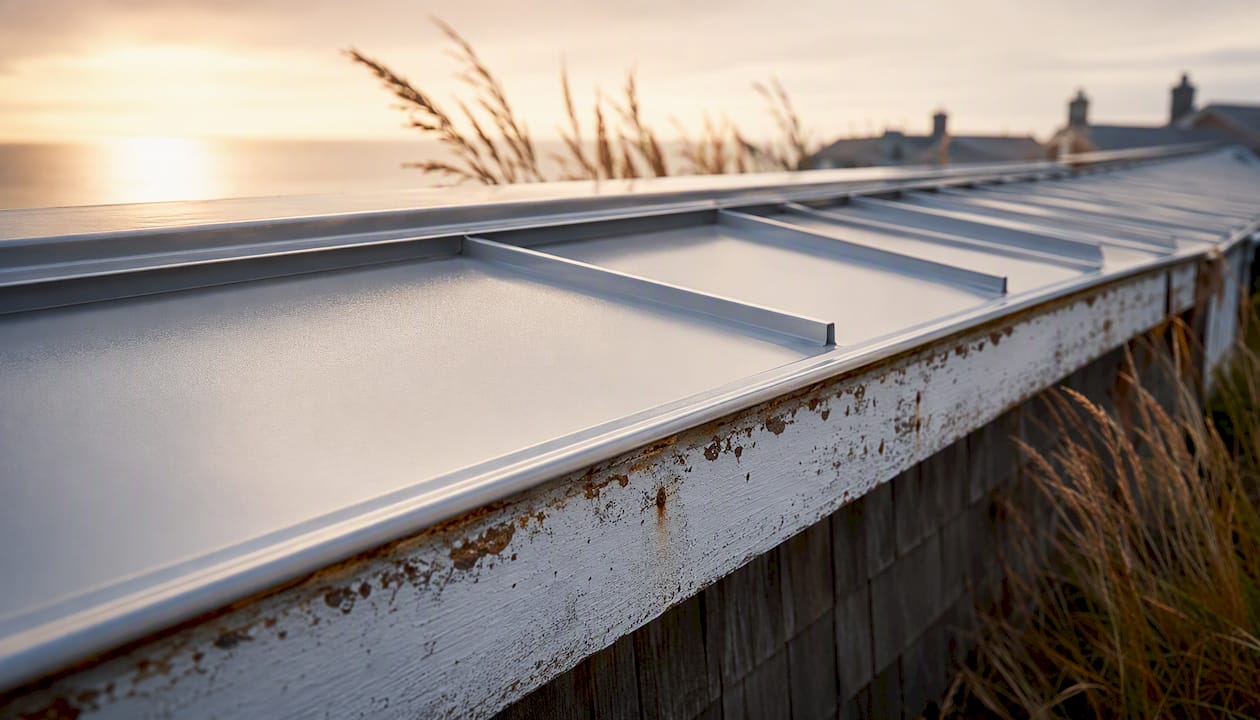
- Galvalume (aluminium-zinc) and aluminium substrates resist corrosion far better than plain galvanized steel in salt air, and stainless or coated fasteners matter just as much as the sheet itself.
What to get in writing on any quote: SR/SRI values, the actual PVDF percentage, substrate grade, and separate warranty terms for paint and substrate.
Pro Tip: A coating with a great SR rating on paper means nothing if it’s sprayed over a bare galvanized substrate near the ocean. Ask specifically what metal sits under the paint.
Winter penalty, solar panels, and the aesthetics trade-off
A lighter roof does absorb less heat in winter too, but in warm coastal climates that heating penalty is small next to the summer cooling win. A few other factors deserve a look before you finalise a colour.
- Rooftop solar panels can reflect additional heat back at their own undersides on very light roofs; talk to your solar installer about panel-mounting height and ventilation gaps.
- Stark white can create noticeable glare for neighbours and, in some estates or coastal towns, run into planning or homeowners’ association restrictions.
- Medium cool tones split the difference: strong reflectance without the glare complaints that pure white sometimes draws.
Pro Tip: If your neighbourhood has architectural guidelines, check them before falling in love with a colour. A light-grey or sandstone with a good SR rating clears most restrictions that stark white doesn’t.
A 9-point checklist for choosing your roof colour
Work through this list before you meet with an installer, and you’ll walk into that conversation asking the right questions instead of just picking a swatch.
- Check your roof’s orientation and sun exposure. North and west-facing slopes in warm regions take the most direct heat.
- Assess your current attic insulation and ventilation. Reflective colour compounds a well-insulated roof’s performance far more than a poorly ventilated one.
- Request SR and SRI numbers for every colour you’re considering, not just the ones marketed as “cool roof” options.
- Prefer PVDF or a proven cool-pigment finish over standard acrylic paint for anything facing direct coastal sun.
- Confirm the substrate is Galvalume or aluminium if you’re within a few kilometres of the coast.
- Ask for a physical sample panel installed or clamped to your roof for a few days before final sign-off.
- Review the warranty terms for paint fade and substrate corrosion separately.
- Discuss solar panel plans with your installer before locking in a colour if you’re adding photovoltaic panels later.
- Check local aesthetic or planning rules if your property falls under an estate or heritage overlay.
Pro Tip: Never skip the sample panel step. Photos and paint chips look nothing like a full sheet under real sun for a week, and it’s the cheapest insurance against choosing a colour you regret.
Keeping coastal roofs cool and corrosion-free over time
Salt air is relentless on fasteners, seams, and coating surfaces, so maintenance isn’t optional if you want that reflectance to last.
- Rinse the roof with fresh water every few months to remove salt buildup, more often if you’re within a kilometre of the shore.
- Inspect fasteners and flashing annually for early corrosion signs.
- Touch up any scratched or chipped coating promptly. Bare metal exposed to salt spray corrodes fast.
Coastal warranties commonly require documented freshwater rinsing and periodic inspections; skipping that maintenance is one of the most common reasons coastal warranty claims get denied. Treat any warranty that doesn’t mention coastal maintenance requirements at all as a red flag.
| Inspection item | Frequency | Who to hire |
|---|---|---|
| Freshwater rinse | Every 3 to 6 months | Homeowner or maintenance contractor |
| Fastener and flashing check | Annually | Roofing professional |
| Coating touch-up | As soon as damage appears | Roofing or painting specialist |
What kind of savings can you actually expect?
Real numbers help justify the decision, and here they are.
Cool roofs can cut peak cooling demand by roughly 11 to 27 percent in conditioned homes, a range wide enough to reflect how much your insulation and HVAC system matter. On a Gulf Coast style home, light colours reflecting 60 to 70 percent of solar radiation have been shown to reduce attic temperatures by 20 to 40°F versus dark roofs, with annual cooling savings estimated around $150 to $400 on a roughly 2,000 square foot home depending on insulation quality and local electricity rates.
Pro Tip: A reflective colour on a poorly insulated roof still helps, but it helps far more once you’ve addressed attic insulation and ventilation. Do both together if your budget allows, since the savings compound rather than simply add up.
How a professional preparation and application process works
Colour and coating specs only perform as promised when the surface underneath is done right. A proper coastal roof job runs through several stages: a site assessment to check the existing substrate and coating condition, removal of loose or failing paint, rust treatment on any exposed metal, priming, then application of the specified coating system followed by a final inspection.
Before hiring anyone, get a written quote listing the SR/SRI values, the exact coating brand and type (PVDF or cool-pigment), substrate grade, and warranty wording in plain language. Cape Apex Painters runs on an in-house team model rather than subcontractors, with preparation-first surface repairs built into every roof job across its Cape Town, Cape Winelands, and Overberg service area, addressing damp and old coating failures before any new finish goes on.
A publisher’s take on heat versus style
The trade-off is simpler than most homeowners assume: pick a light-to-medium cool colour with a durable finish, and you get real comfort without giving up curb appeal. That balance only holds up long term with proper installation and consistent maintenance behind it.
Get your roof colour and coating specified properly
Picking the right shade off a chart only gets you halfway there. What actually determines whether that colour performs for a decade is the prep work, the coating spec, and the substrate underneath, which is exactly where Cape Apex Painters focuses its process. Every roof job starts with an in-person assessment where the team checks existing coating condition, substrate corrosion, and sun exposure before recommending a colour and coating system.

Cape Apex Painters can supply written specs backed by SR and SRI figures for the colours under consideration, along with a sample panel trial so you see the finish on your own roof before committing. For pairing your roof tone with exterior wall colours, a design-focused look at coastal exterior pairing is worth a browse before your consultation. Book an inspection and request a written quote through Cape Apex Painters to get started.
Frequently asked questions
Does roof colour really change indoor temperature in a coastal home?
Yes. Light and medium cool colours reflect more solar energy than dark roofs, keeping attic and indoor temperatures noticeably lower in direct sun.
Is white always the best coastal roof colour?
Not necessarily. White reflects the most heat, but medium tones often hide salt residue and streaking better and face fewer glare or planning objections.
Will a light roof cost me more in winter heating?
There’s a small winter heating penalty, but in warm coastal climates it’s usually outweighed by summer cooling savings.
What’s the difference between PVDF and cool-pigment coatings?
PVDF is a fluoropolymer resin that resists fading and chalking over decades; cool-pigment systems boost near-infrared reflectance so darker colours still perform thermally.
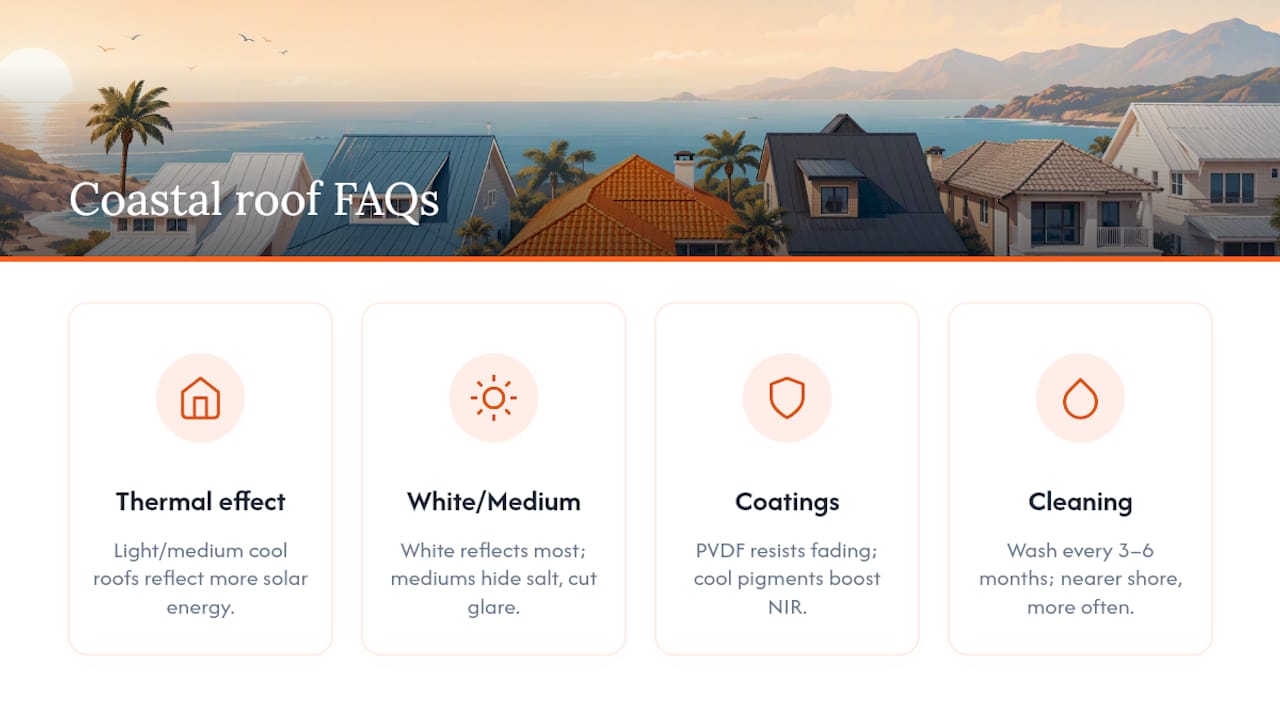
How often should I wash a coastal roof to protect the coating?
Every three to six months with fresh water is a common recommendation, more frequently for homes closer to the shoreline.
Sources
- Guidelines for Selecting Cool Roofs
- Using cool roofs to reduce heat islands | US EPA
- Style and color | Gulf Coast Metal Roof Guide
- How Colorbond roof sheets keep homes cooler in Rye, Dromana, Rosebud and cut your summer energy bills | Singh Roofing Supplies